If your dentist has told you that you need a crown, your next two questions are probably “which kind?” and “how much?” This guide walks through the main types of dental crowns and cost factors, so you know what to expect before your visit.
At Blooming Dental in Des Moines and Lynnwood, WA, crowns are planned by Dr. Sung Wook Yoon, a prosthodontist. Prosthodontists are dentists with extra specialty training in restoring and replacing teeth, and crown and bridge work is at the core of that training.
Below, we compare zirconia, E-max, and gold crowns in plain language: how each one looks, how strong it is, where it fits, and what drives the price.
Types of Dental Crowns and Cost: The Short Answer
Most crowns today are made from zirconia, a glass-ceramic such as E-max, gold alloy, or porcelain fused to metal. Zirconia and gold handle heavy chewing forces well, while glass-ceramics look the most like natural enamel, which is why they are popular for front teeth.
On price, a 2023 to 2024 national cost study conducted for CareCredit put the average dental crown at about $697 to $1,399. That is a reference range, not a quote: your own fee depends on the material, how the crown is made, what the tooth needs first, and your insurance plan.
At Blooming Dental, you get a written estimate before you commit.
What Is a Crown for a Tooth?
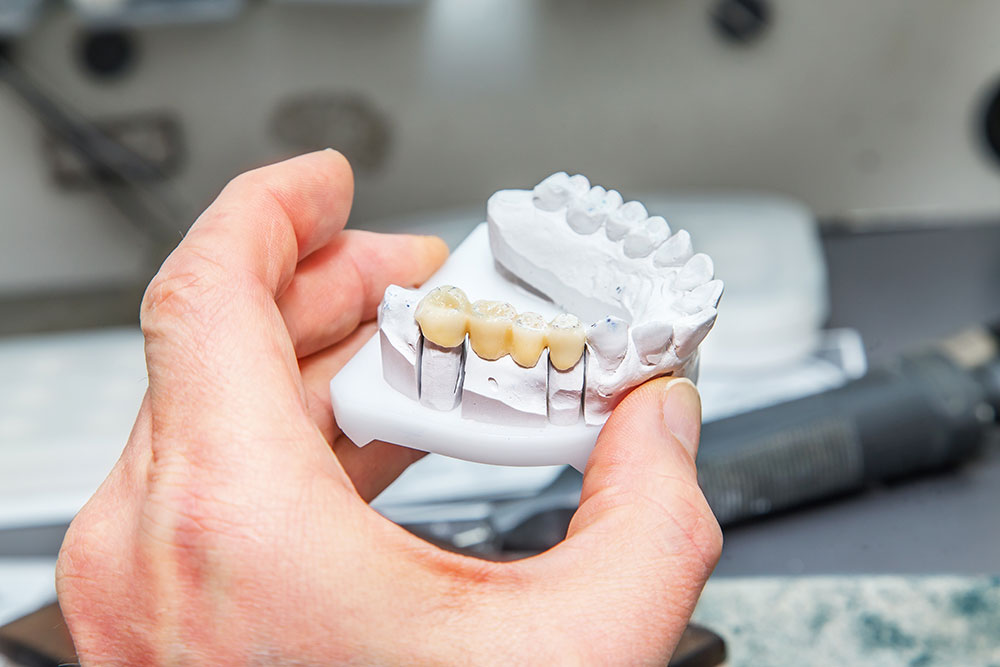
A dental crown is a custom-made cover that fits over the whole visible part of a tooth. It restores the tooth’s shape, strength, and appearance while protecting what is left underneath.
You may hear it called a “tooth cap.” When it comes to tooth cap vs crown, there is no real difference: “cap” is simply the everyday word for the same restoration.
Crowns are often recommended to:
- Rebuild a tooth with a large cavity or an old filling that is too big to replace safely
- Hold together a tooth that is cracked, broken, or badly worn
- Protect a tooth after a root canal, since a treated tooth is more brittle and can split under chewing
- Replace a missing tooth on top of a dental implant
- Cover a tooth that is badly stained or misshapen when bonding or a veneer will not hold up
Crown vs Filling: How Do You Know Which You Need?
A filling repairs a small section of a tooth. A crown covers and protects the whole tooth.
When a cavity or crack takes up a large part of the tooth, a filling can leave thin walls that are likely to break. A crown holds the tooth together instead.
Your dentist will usually base the crown vs filling decision on how much healthy tooth is left, not on the size of the hole alone. At Blooming Dental, we recommend a crown only when the tooth genuinely needs one.
Types of Dental Crowns and Cost: Zirconia, E-max, and Gold Compared
Each material has real strengths, and none is the right choice for every tooth.
| Material | Main Strength | Often Chosen For |
|---|---|---|
| Zirconia | Very strong, resists chipping | Molars, grinders, implant crowns |
| E-max (lithium disilicate) | Lifelike, enamel-like look | Front teeth and premolars |
| Gold alloy | Rarely chips, little tooth removed | Back molars that do not show |
| Porcelain fused to metal | Metal core, tooth-colored surface | Some bridges and tight spaces |
At Blooming Dental, we place porcelain and all-ceramic, zirconia, and porcelain-fused-to-metal crowns, and the consultation decides which one fits your tooth.
Zirconia Crowns
A zirconia crown is made from one of the toughest ceramics used in dentistry. It is tooth-colored, resists chipping under heavy chewing, and can be made thinner, so less healthy tooth needs to be removed.
That strength makes zirconia the usual pick for molars, for people who grind or clench, and where a ceramic crown has already fractured. Layered zirconia looks far more natural than the opaque early versions, but its porcelain surface can chip, so solid (monolithic) zirconia is a common choice for back teeth.
E-max Crowns
E-max usually refers to IPS e.max lithium disilicate, a glass-ceramic made by Ivoclar. Like other all-ceramic crowns, it lets light pass through much like natural enamel, which is why many dentists choose it for a front tooth crown, where appearance matters most.
Lithium disilicate is also strong enough for many premolars, but for patients who clench or grind hard, zirconia or gold is often the safer choice. If you would like E-max specifically, ask at your consultation which ceramic your crown will be made from.
Gold Crowns
A gold tooth crown is usually made from a gold alloy rather than pure gold. According to Cleveland Clinic, metal crowns rarely chip or break, last the longest in terms of wear, and need only a small amount of enamel removed.
The obvious downside is the color, so gold is usually saved for molars that do not show when you smile. If you prefer gold, ask at your consultation whether it suits your tooth and your bite.
What About Porcelain Crowns?
“Porcelain crown” is a broad term. It can mean an all-ceramic crown, such as E-max, or a porcelain-fused-to-metal (PFM) crown with a metal inner layer.
PFM crowns can be shade-matched and used on front or back teeth, though Cleveland Clinic notes the porcelain coating may chip over time and expose the metal underneath. PFM is still useful in some dental bridge designs and tight-clearance cases, and Dr. Yoon will tell you plainly when it is the better engineering answer.
Same-Day Crowns vs Lab-Made Crowns
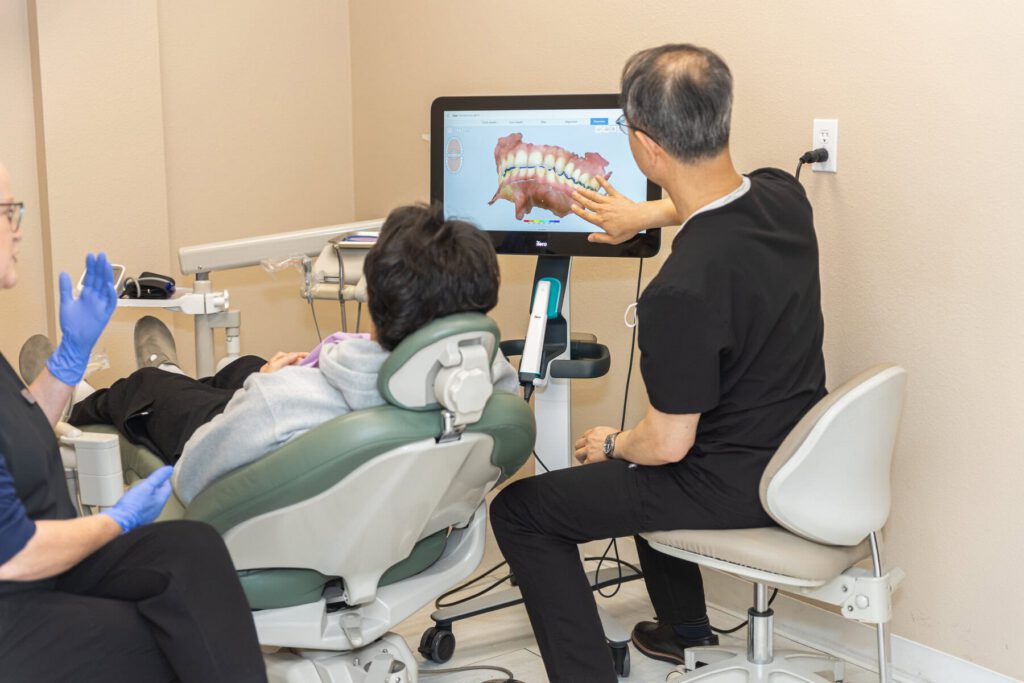
Blooming Dental offers same-day crowns at both offices. Your tooth is scanned, the crown is designed on screen and milled in our office, and you leave with the finished crown cemented in place, with no temporary and no second trip.
Not every tooth is a candidate. For front teeth and demanding cosmetic cases, a ceramist layers the porcelain by hand in a lab, which takes an extra week or two but adds translucency and color depth that milling cannot quite reach.
Choosing a Crown by Tooth Position
Where the tooth sits in your mouth is often the biggest factor.
- Front teeth: Appearance comes first. An all-ceramic crown, such as E-max or hand-layered porcelain, can be shade-matched to your neighboring teeth.
- Premolars: A balance of looks and strength. Zirconia or a glass-ceramic both work well for most people.
- Back molars: Strength comes first. Zirconia or gold handle the heaviest chewing forces.
- If you grind or clench: Solid zirconia or gold, often paired with a night guard to protect all your teeth.
This is where a prosthodontist’s training helps. Dr. Yoon reads your whole bite, not just one tooth, before choosing a material, because a cracked tooth is often a sign of where chewing force is landing.
If you need several crowns, a bridge, or an implant, it helps to plan them together. You can read more in our post on how a prosthodontist plans crowns, bridges, and implants together.

What Each Crown Costs and Why Prices Vary
How much does a dental crown cost? As a national reference point, not a quote, a 2023 to 2024 cost study across all 50 states, conducted for CareCredit, put the average dental crown at about $697 to $1,399. CareCredit notes that actual cost varies with geography, provider, and other factors.
Here is what moves the number for your tooth:
- Material: Ceramic, zirconia, and porcelain-fused-to-metal crowns are priced differently, and a gold alloy crown also carries the cost of the metal itself.
- How the crown is made: A crown milled in our office the same day and a crown hand-layered in a lab take different amounts of time and skill.
- Work needed first: A core build-up or a root canal adds to the total. The same CareCredit study averaged $984 to $1,337 for a root canal.
- Your insurance plan: Most plans treat crowns as major restorative work.
- Front tooth crown cost: A front tooth can cost more when a ceramist hand-layers the porcelain for a closer shade match.
A crown on an implant is part of a larger treatment that also includes the implant and its abutment. As of this writing, Blooming Dental is running a single-implant special of $2,999 (regularly $4,700) that includes the implant, a custom abutment, and a zirconia crown.
The special is subject to an exam and cannot be combined with insurance benefits, so check our special offers page for current terms. For a full breakdown of implant pricing, see our guide to dental implant costs in Washington State.
Tooth Crown Cost With Insurance
Most dental plans treat a crown as major restorative work and cover a share of the cost after your deductible, up to your annual maximum. Two details surprise a lot of patients:
- Annual maximums: Most plans cap what they pay each year, which matters if you need more than one crown.
- Alternate benefit clauses: Some plans pay only for the least expensive treatment option, and the American Dental Association explains that the patient pays the difference. On a back tooth, that can mean a tooth-colored crown is paid at the rate of a metal one.
At Blooming Dental, we accept Delta Dental and UHC plans, and we file claims as an out-of-network provider for other insurance. We check your benefits before treatment at no charge and give you a written estimate before you commit.
If there is a remaining balance, CareCredit, Cherry, Lending Club, and HFD offer monthly payment plans, and HSA and FSA funds are accepted. We also offer cash discounts for patients paying in full. See our financing and insurance options for details.
The Tooth Crown Procedure at Blooming Dental
Whether you visit our Des Moines or Lynnwood office, the dental crown procedure follows the same basic steps:
- Exam and X-rays: We check the nerve and bone health first. If the nerve is involved, root canal treatment comes before the crown.
- Shade match and digital scan: Your shade is chosen while your natural tooth is still there to match against. Then the tooth is numbed, shaped conservatively, and scanned with an iTero scanner instead of putty impressions.
- Same-day mill or lab fabrication: A same-day crown is designed and milled while you wait. A lab crown takes one to two weeks, and you wear a temporary crown in the meantime.
- Fit, bite check, and cementation: The crown is tried in before it is cemented, and the contacts, the shade in natural light, and your bite are all checked and adjusted.
- Follow-up: Mild sensitivity usually settles within days, and anything that lingers gets a quick adjustment.
Tooth crown before and after results are often easiest to see on front teeth, where a well-matched crown blends in with the teeth beside it. You can learn more about same-day and lab-made options on our dental crowns page.
How to Make a New Crown Last
With good home care and regular checkups, many crowns last 15 years or more. What usually shortens that is decay at the edge, gum disease, or unprotected grinding.
- Brush twice a day and clean between your teeth daily, paying attention to the edge where the crown meets the gum.
- Wear a night guard if you grind or clench your teeth.
- Go easy on very hard or sticky foods, which can damage or loosen a crown.
What If You Have a Broken Crown Tooth?
Crowns are strong, but they can still crack, chip, or come loose, and decay can form where the crown meets the tooth. Cleveland Clinic advises calling your dentist if you notice a loose crown, cracks or chips, or sharp edges that bother your tongue or gums.
If you have a broken crown tooth, keep any pieces, avoid chewing on that side, and call us as soon as you can. A small chip can sometimes be polished or repaired; otherwise, the crown is replaced.
A good share of our work is redoing crowns placed elsewhere and diagnosing why they failed. A replacement is also a chance to choose a stronger material for your bite.
Questions to Ask Before You Choose a Crown
These questions help you compare options and avoid surprises:
- Which material do you recommend for this tooth, and why?
- Will my crown be milled the same day or made in a lab?
- Does the tooth need a build-up or a root canal first?
- What will my insurance pay, and does my plan have an alternate benefit clause for back teeth?
- What exactly does the written estimate include?
To get answers for your own tooth, call our Des Moines office at (253) 838-4363 or our Lynnwood office at (425) 775-1800, or request an appointment online.
Frequently Asked Questions
Which crown material lasts the longest?
Gold alloy has the longest track record, and metal crowns rarely chip or break. Zirconia and lithium disilicate (E-max) also perform well in clinical studies, and with good care, many crowns last 15 years or more.
Is a zirconia crown or an E-max crown better for a front tooth?
E-max is often chosen for front teeth because glass-ceramic looks the most like natural enamel. Modern zirconia can also look natural and may suit patients with a strong bite. Your dentist will match the choice to your smile and bite.
How much does a dental crown cost without insurance?
As a national reference point, a 2023 to 2024 cost study conducted for CareCredit put the average crown at about $697 to $1,399. Your fee depends on the material, how the crown is made, and any work the tooth needs first. Blooming Dental gives you a written estimate before you commit.
Does insurance cover dental crowns?
Most plans treat a crown as major restorative work and cover a share after your deductible, up to your annual maximum. We check your benefits before treatment at no charge.
Does getting a crown hurt?
The tooth is numbed before it is shaped, so most patients feel pressure rather than pain. Mild sensitivity to cold or pressure for a few days afterward is normal and usually settles on its own.
Is a tooth cap the same as a crown?
Yes. Cap is simply the everyday word for a crown, a custom cover that fits over the whole visible part of a tooth to restore its shape, strength, and appearance.
Can I get a crown in one visit?
Often, yes. Blooming Dental offers same-day crowns at both offices, designed and milled in the office and fitted in a single visit. Not every tooth is a candidate, and front teeth are sometimes better served by hand-layered lab porcelain.

Schedule a consultation and leave with a clear, personalized plan — including what insurance covers and what financing looks like.