Some restorative work has to start with surgery — removing a tooth that can’t be saved, rebuilding lost bone, or placing an implant. Here, the surgery and the restoration that follows are planned by the same specialist.
The surgical procedures that prepare your mouth for a restoration and then deliver it — supported by PRF therapy and 3D imaging taken in our own offices.
Worth being precise: Dr. Yoon is a prosthodontist — a recognized specialist in restoring and replacing teeth — not an oral and maxillofacial surgeon. The surgery we do is the part of prosthodontics that gets a site ready for a crown, bridge, implant or denture. Procedures that belong with an oral surgeon — wisdom teeth included — we refer out and help coordinate.
The advantage of having it done here is continuity: the person planning the surgery is the person who will make the tooth that goes on top of it.
Request an AppointmentFour procedures cover most of the surgical work a restoration depends on.
When a tooth is broken at or below the gum, severely decayed, or has curved or fragmented roots, it’s accessed through the gum or sectioned — with preserving the surrounding bone a priority from the start. Full extraction details here.
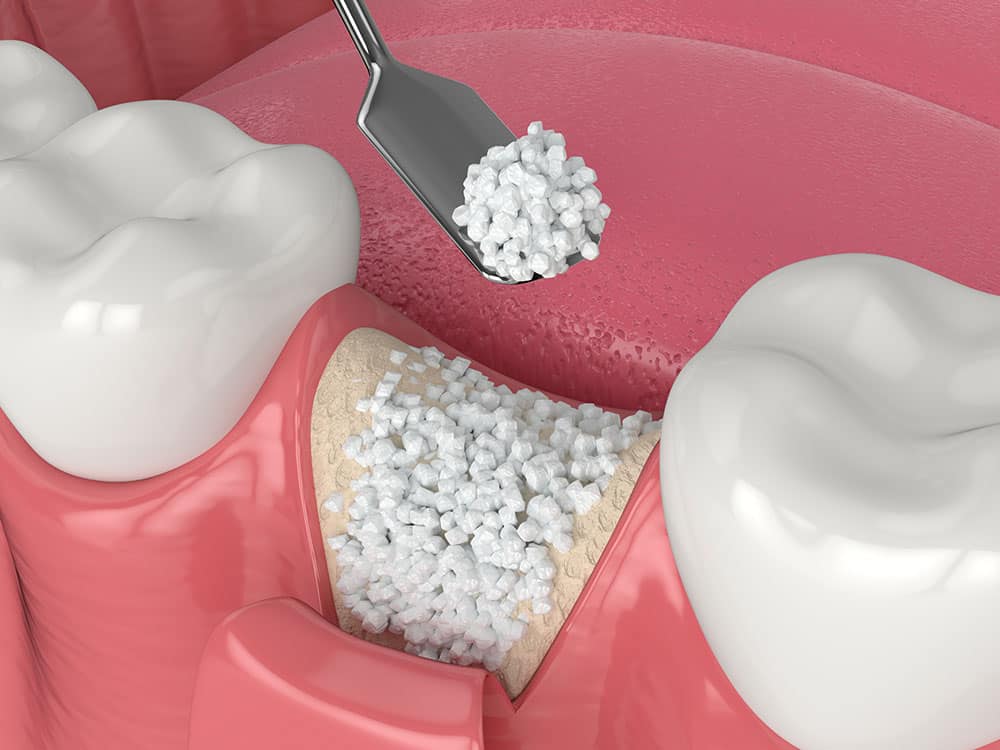
Bone shrinks the moment a tooth is removed. Graft material placed at extraction time stops the ridge collapsing; where bone is already lost, ridge augmentation rebuilds the width and height an implant needs — the foundation before the house.
A titanium post planned from a 3D scan, placed, and left to integrate before the restoration goes on. Because Dr. Yoon also makes the crown or denture, the implant is positioned for the restoration — not the other way round. Explore dental implants.
Platelet-Rich Fibrin from a small sample of your own blood, concentrated and placed into the surgical site — faster healing, less swelling, better graft integration, lower dry-socket risk. For any grafting procedure we treat it as standard.
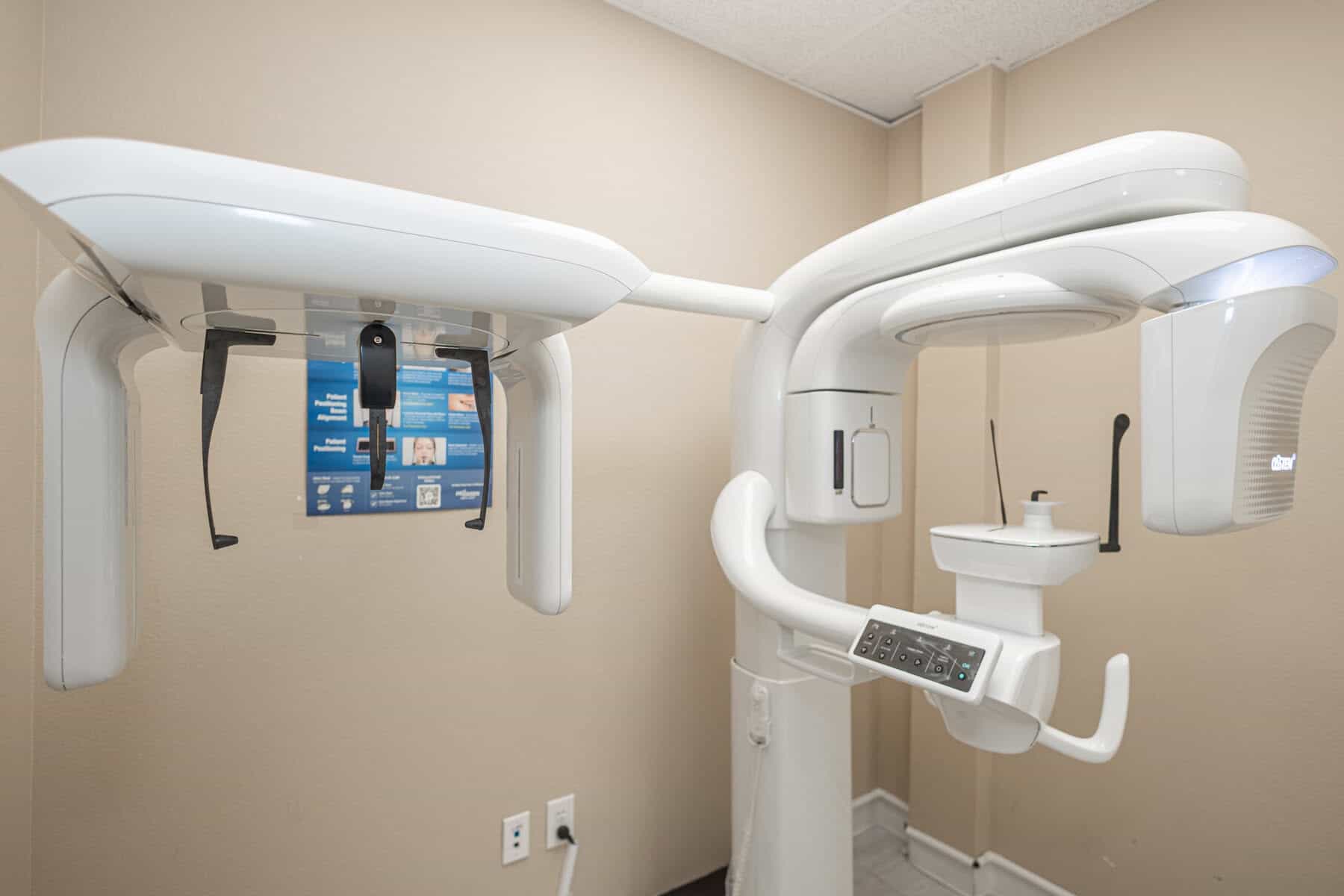
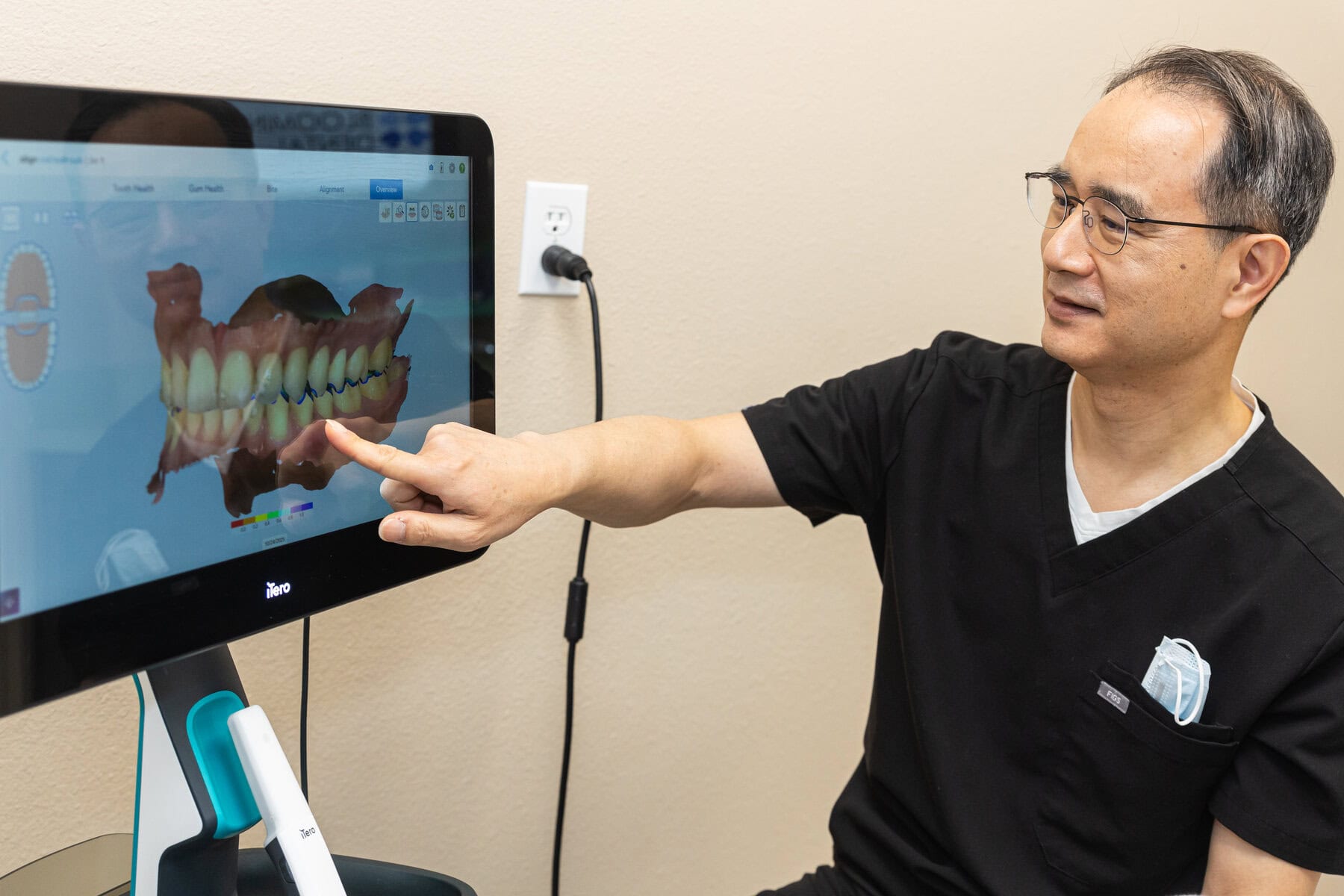
A flat X-ray can’t show bone width — and width is usually what decides whether an implant is possible. We take panoramic and 3D cone beam images in our own offices.
It also means you see what we see — most patients find a surgical plan far easier to agree to when they’re looking at their own scan rather than being told about it.
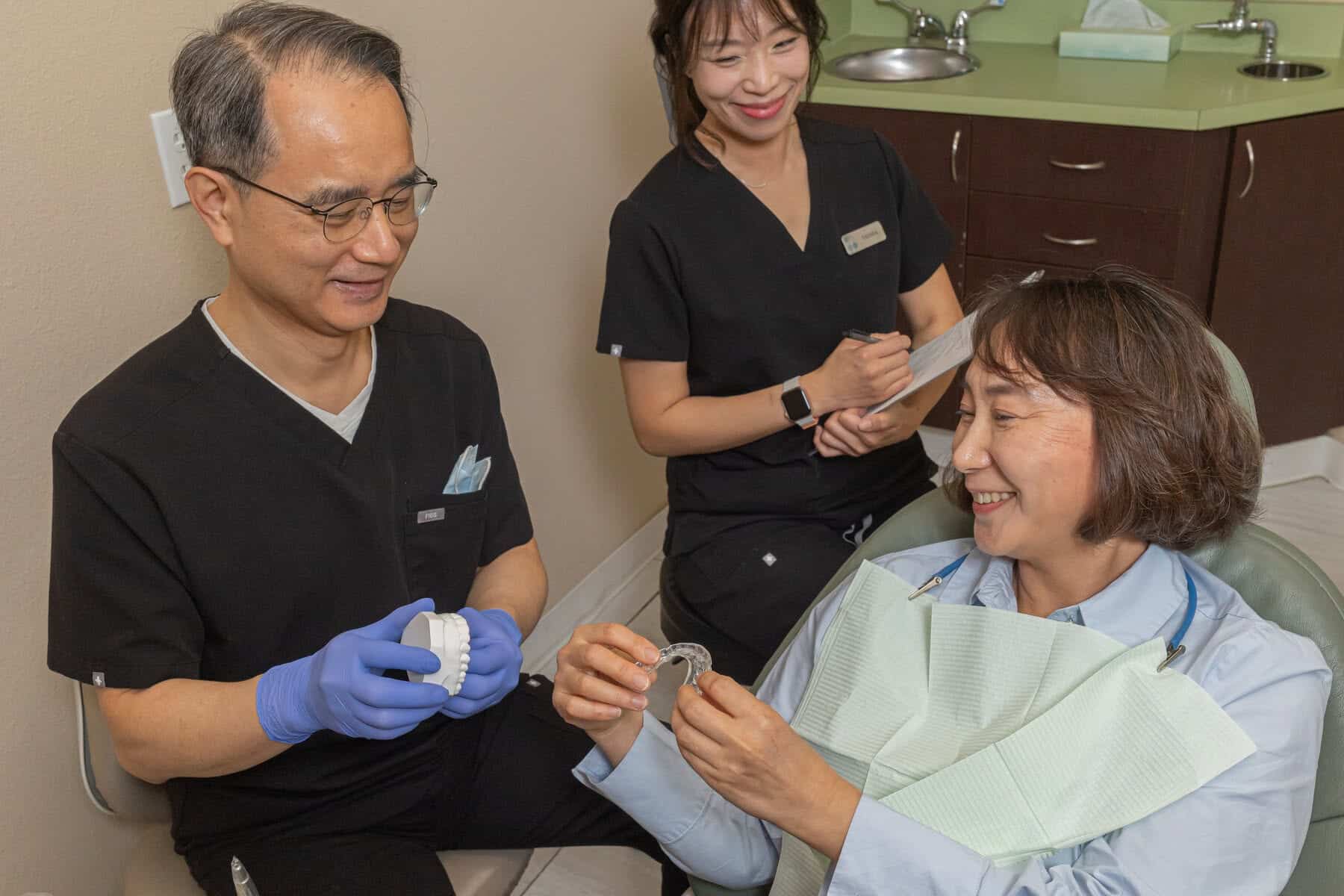
Anxiety about surgery is normal, and we plan around it rather than talking you out of it — tell us when you book, not when you sit down.
Everything we perform is done under local anesthetic, with nitrous oxide sedation available — it takes the edge off within minutes and clears within minutes of the mask coming off, so most patients drive themselves home. We don’t offer general anesthesia; if a case genuinely needs it, that’s a reason to refer you, and we’ll say so.
For the first 24–48 hours after surgery, everything is about protecting the clot:
You leave with written instructions and a number to call. Pain increasing after day three, unstopped bleeding, fever or growing swelling, or numbness that hasn’t resolved — call, don’t wait it out.
 A Real Number, Not a Guess
We examine and image before quoting — a number given without seeing the site isn’t a real number. What shapes the fee:
Benefits verified and a written estimate given before treatment starts — with CareCredit, Cherry, LendingClub and HFD financing available.
Surgical tooth extractions, socket preservation and bone grafting, ridge augmentation, dental implant placement, and PRF therapy — in both our Des Moines and Lynnwood offices. It’s the part of the prosthodontic specialty that prepares a site for a restoration and then places it.
No — he’s a board-trained prosthodontist, a different recognized dental specialty. Prosthodontic training covers the surgical procedures that support restoring teeth, which is what we do here; anything that belongs with an oral and maxillofacial surgeon, we refer out.
No. If a wisdom tooth needs to come out we refer you to an oral surgeon we trust, share your imaging, and help coordinate your care around the referral. Every other type of surgical extraction we handle ourselves.
Material added to the jaw for your own bone to grow into, rebuilding lost volume. The two common cases: socket preservation right after an extraction to stop the ridge collapsing, and ridge augmentation to rebuild bone that’s already gone so an implant can be placed.
Platelet-Rich Fibrin: a small sample of your blood, spun to concentrate healing platelets and growth factors, placed into the surgical site. It speeds soft-tissue healing, reduces swelling, improves graft integration and lowers dry-socket risk — entirely your own biology.
We don’t offer general anesthesia. Procedures are done under local anesthetic with nitrous oxide sedation available — it wears off within minutes of the mask coming off, so most patients drive themselves home. If a case genuinely needs general anesthesia, we refer it.
Most patients are comfortable within three to seven days after a surgical extraction or socket graft, and back to normal activity inside a week. Bone healing underneath takes longer — three to six months before a grafted socket takes an implant, and larger augmentations can need more.
Yes — panoramic and 3D cone beam images taken in our own offices show bone volume, root positions, the sinus and the nerve before anything starts. For implants especially, planning from 3D is what makes the position predictable and the restoration correct.
Most plans cover surgical extractions, and many contribute toward clinically necessary bone grafting; implant coverage varies widely, and some medical plans contribute in specific circumstances. We verify benefits first and give a written estimate.
Call the office — don’t wait for a routine slot if you have swelling, a broken tooth, or pain keeping you awake. We’ll get you assessed and comfortable, then plan definitive treatment; if what you need falls outside our scope, we’ll point you to the right specialist the same day.
22030 7th Ave South #100
Des Moines, WA 98198
| Office Hours | |
|---|---|
| Monday | 8:00 am – 3:30 pm |
| Tuesday | 8:00 am – 3:30 pm |
| Wednesday | Closed |
| Thursday | 8:30 am – 4:00 pm |
| Friday | Closed |
4215 198th Street SouthWest #205
Lynnwood, WA 98036
| Office Hours | |
|---|---|
| Monday | Closed |
| Tuesday | Closed |
| Wednesday | 9:00 am – 4:00 pm |
| Thursday | Closed |
| Friday | Closed |
Book your exam and 3D scan — see what we see, get a written estimate, and have the surgery and the restoration planned by the same person.