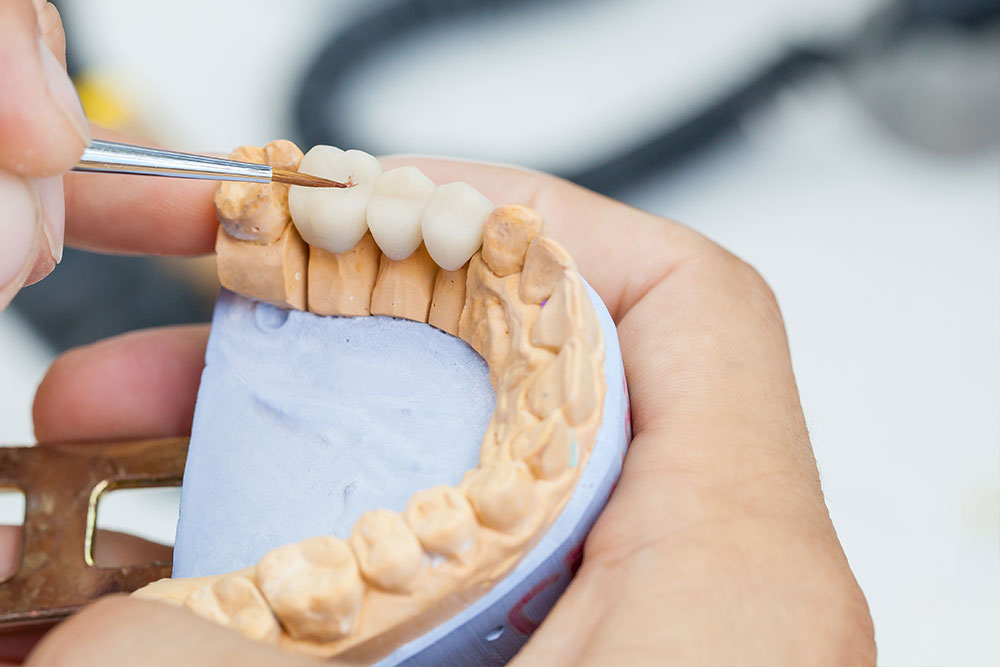
A crown is often the difference between keeping a damaged tooth and losing it. Every crown here is planned around your bite, shaped for a precise fit, and shade-matched to the teeth beside it — with same-day crowns at both offices.

A custom cap that covers the entire visible part of a tooth — restoring its shape and strength while protecting what’s left underneath.
Crowns are the standard answer when a tooth is too compromised for a filling: a large cavity, a crack or fracture, years of grinding wear, or a tooth that has just had root canal treatment. Whether it’s one tooth or several, the aim is the same — keep your own tooth, and make the restoration on top of it disappear.
Not every tooth needs the same crown. These are the four routes we use most — the consultation decides which fits your tooth.
Your tooth is scanned, the crown designed on screen and milled in our office, and you leave with the finished restoration cemented in place. One appointment, no temporary, no second trip.
For front teeth and demanding aesthetic cases, a ceramist layers the porcelain by hand — an extra week or two and a temporary crown buys translucency and color depth milling can’t quite reach.
A root-canal-treated tooth is hollow and brittle — it will eventually split under chewing if left uncrowned. Prompt crowning is the single biggest factor in whether that tooth survives long-term.
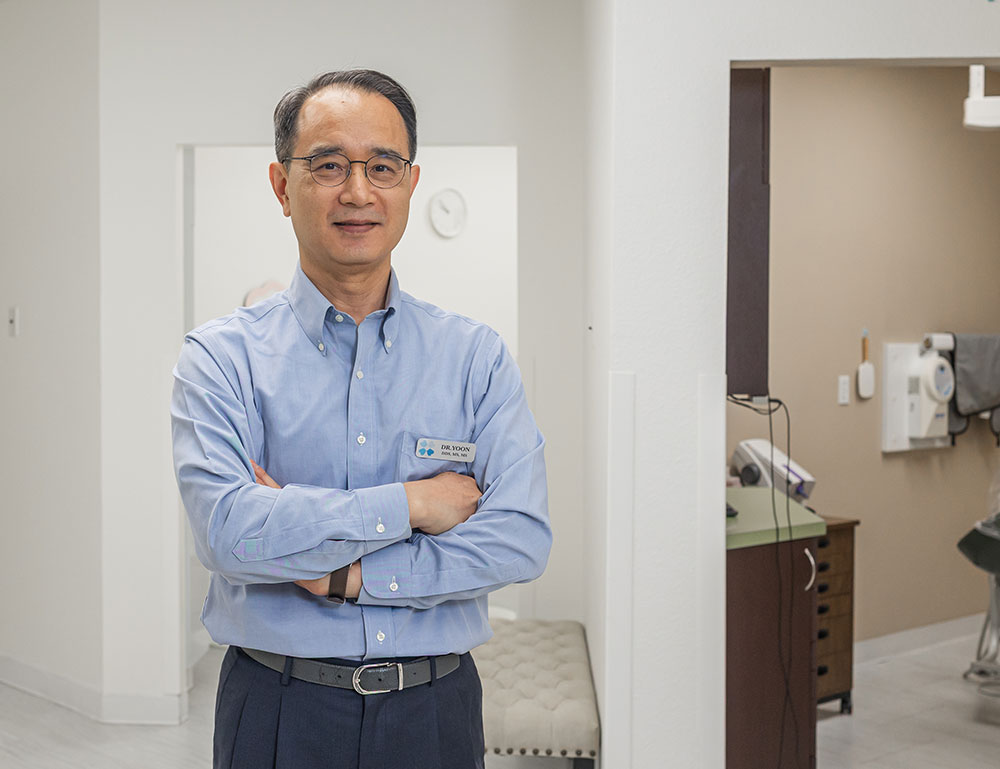
When the tooth is already gone, the crown sits on an implant. Dr. Yoon plans the implant position and the crown together — the restoration decides where the implant should go, not the reverse.
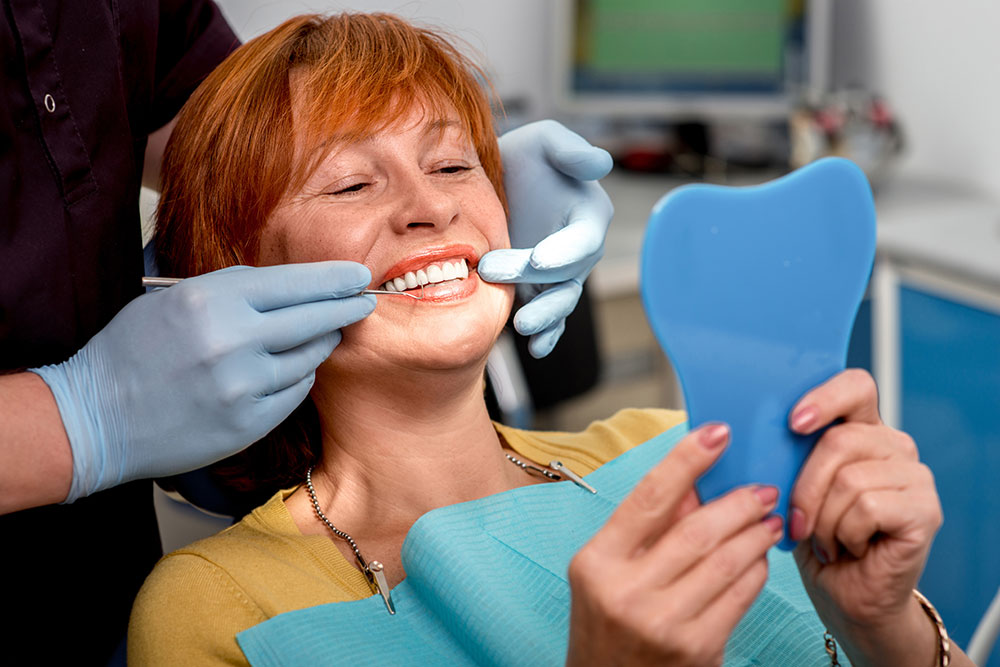
Material choice is a trade-off between how strong a crown must be and how invisible it must be. Where the tooth sits usually settles it.
Porcelain & all-ceramic transmit light like natural enamel — the default for front teeth and any tooth that shows when you smile.
Zirconia is the toughest material in routine use — it resists chipping, can be made thinner (so less healthy tooth is removed), and modern layered zirconia looks far better than the opaque early generations. Usually the pick when:
Porcelain fused to metal remains useful in some bridge designs and tight-clearance cases — we’ll tell you plainly when it’s the better engineering answer.
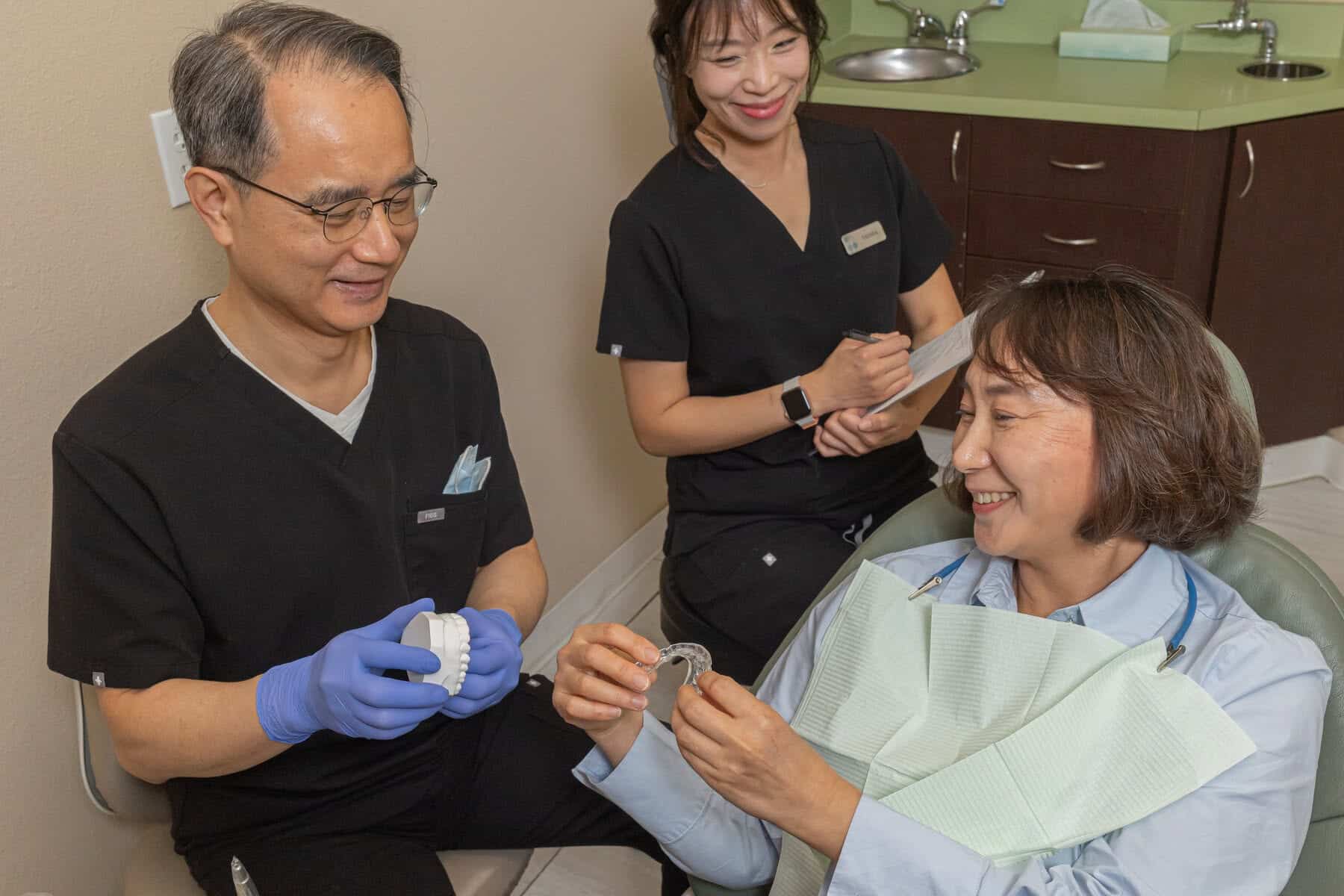
No putty impressions — your tooth is scanned with an iTero scanner, and the file goes straight to the mill or the lab with nothing to distort in transit.
We check the nerve and bone health first — if the nerve is involved, root canal treatment comes before the crown. We also read your whole bite, because a cracked tooth is often a symptom of where force is landing.
Shade is chosen while your natural tooth is still there to match against; then the tooth is numbed, shaped conservatively, and scanned.
Same-day: designed and milled while you wait, then glazed. Lab: a temporary crown for one to two weeks while the ceramist works.
Tried in before cementing: full seating, correct contacts, floss passing cleanly, shade checked in natural light — and the bite adjusted, because a slightly high crown is the usual cause of soreness.
Mild sensitivity settles within days; anything persistent gets a minutes-long adjustment. If you grind, a night guard is the cheapest insurance on restorative work there is.
 Written Estimate Before You Commit
Crown fees are not one number — any practice quoting one before looking at the tooth is guessing. What actually moves the price:
We check your benefits and give you a written estimate before you commit — with CareCredit, Cherry, LendingClub and HFD financing if you’d rather spread the cost.
A custom-made cap covering the whole visible part of a tooth — restoring shape, size and strength while protecting the natural structure underneath. Crown and bridge work is the core of Dr. Yoon’s prosthodontic specialty training.
A filling replaces missing tooth structure; a crown replaces the outer shell. Once too much tooth is gone, a filling has nothing solid to hold and the tooth risks splitting. The usual triggers: a large cavity, a crack, heavy grinding wear, or a fresh root canal. We recommend a crown only when the tooth genuinely needs one.
Yes — designed and milled in-office and fitted in a single visit, no temporary and no second appointment. Not every tooth is a candidate; the most visible teeth are sometimes better served by hand-layered lab porcelain, and we’ll tell you which route suits yours.
Yes — they’re milled from a solid block of high-strength ceramic, so strength isn’t the trade-off. The difference is in front-tooth aesthetics, where hand-layered porcelain reproduces translucency more closely. For back teeth, a milled crown is an excellent long-term restoration.
All-ceramic and porcelain (most natural-looking, usual for front teeth), zirconia (extremely strong, suits back teeth and grinders), and porcelain fused to metal (well-proven, still useful in certain bridge and clearance situations).
Commonly 15–20 years or more with good home care and regular checkups. What shortens that is usually what happens around the crown — decay at the margin, gum disease, or unprotected grinding. If you grind, a night guard is the best protection you can buy.
You’re numb during preparation, so no. Mild sensitivity to cold or pressure for a few days afterwards is normal and settles on its own. Nitrous oxide sedation is available if you’re anxious — tell us before we start.
That’s the part a prosthodontist spends years learning — shade, translucency, surface texture and edge shape decide whether a crown reads as a tooth or as dental work. We match in natural light before cementing; most patients can’t pick out which tooth is the crown.
For most patients, yes — on both accuracy and comfort. The iTero scan means no tray of putty, no gagging, and none of the small distortions putty picks up when removed or shipped: a better-fitting crown with fewer adjustments on fitting day.
Most plans treat a crown as major restorative and cover a share after a deductible, up to your annual maximum. We check your plan, give you a written estimate before you commit, and offer third-party financing to spread the cost.
22030 7th Ave South #100
Des Moines, WA 98198
| Office Hours | |
|---|---|
| Monday | 8:00 am – 3:30 pm |
| Tuesday | 8:00 am – 3:30 pm |
| Wednesday | Closed |
| Thursday | 8:30 am – 4:00 pm |
| Friday | Closed |
4215 198th Street SouthWest #205
Lynnwood, WA 98036
| Office Hours | |
|---|---|
| Monday | Closed |
| Tuesday | Closed |
| Wednesday | 9:00 am – 4:00 pm |
| Thursday | Closed |
| Friday | Closed |
If a tooth is cracked, worn, heavily filled or has just had a root canal, a crown is usually what keeps it. iTero scanning and same-day milling mean a precise fit and a natural result.