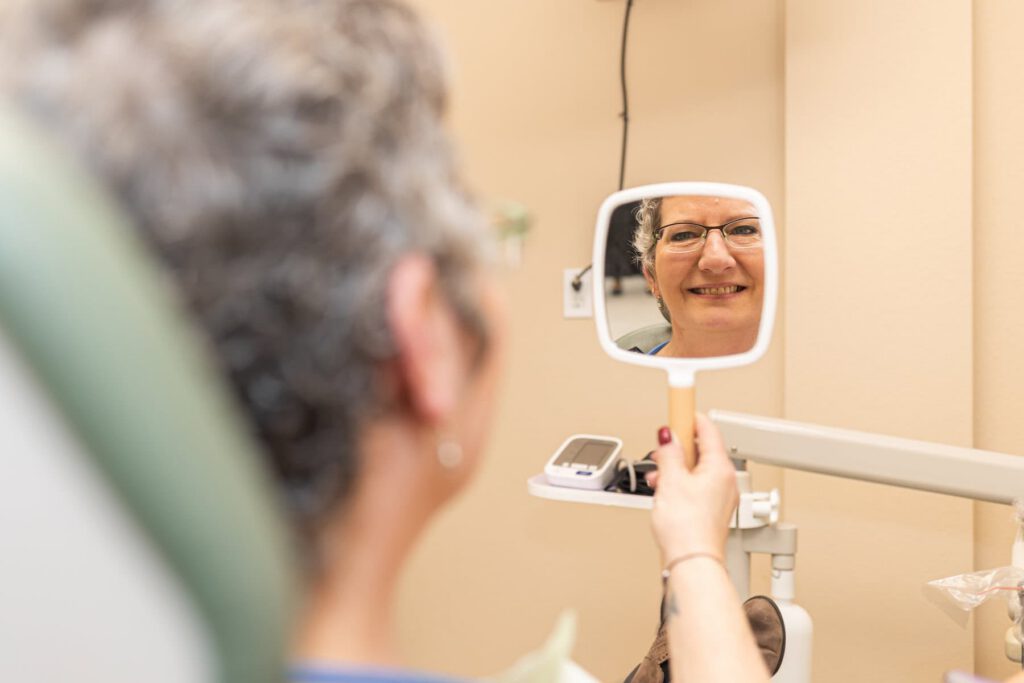
If you have started looking into dentures, you have probably noticed that almost every guide jumps straight to materials, brands and prices. That is the wrong starting point. There is one question that decides your path before any of that matters, and it is a simple one: how many natural teeth do you still have?
Answer that, and the choice between partial dentures and a full denture mostly makes itself. This guide walks through how the decision actually gets made at our Des Moines and Lynnwood offices, where implants change the answer, and the questions worth asking before you commit to anything.
Partial or Full Dentures? The Short Answer
If you still have healthy natural teeth in the arch, you want a partial denture. If every tooth in that arch is gone or beyond saving, you need a full denture. The arch matters, not the mouth as a whole — it is common to need a partial on top and a full on the bottom, or the other way around.
Everything after that — materials, implants, how it attaches — is a second decision about stability, not about which type you need. You can see every option we design side by side on our dentures page for Des Moines and Lynnwood.
What Is a Partial Denture?
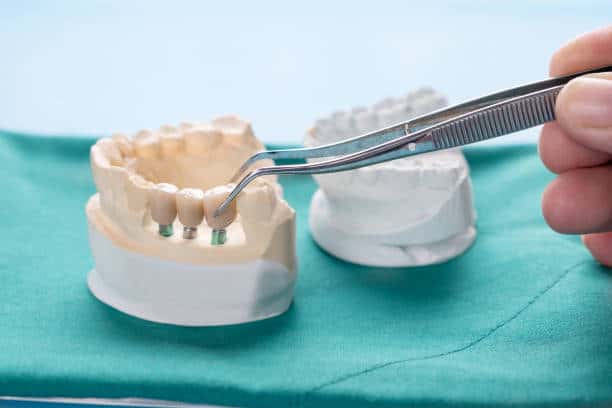
A partial denture replaces several missing teeth while keeping the natural teeth you still have. It attaches to those remaining teeth with clasps or precision attachments, so your own teeth do part of the work of holding it in place.
That is the real advantage of a partial: it is the only removable option that preserves healthy teeth rather than removing them. A dentist who suggests taking out sound teeth so you can have a full denture instead is worth a second opinion.
The trade-off is design sensitivity. A poorly balanced partial rocks slightly every time you bite, which causes sore spots and puts stress on the very teeth it clips to. Balanced design is what prevents the slipping and sore spots people associate with partials.
Upper Partial Dentures vs Lower Partial Dentures
Upper and lower partials behave differently, and it is worth knowing which one you are dealing with:
- Upper partial dentures have more surface area to work with and a broader palate for support, so they tend to feel stable sooner. The design question is usually how much palate to cover — less is more comfortable, but needs more precise engineering to stay rigid.
- Lower partial dentures have less room, a tongue that moves constantly and a horseshoe shape with no palate to brace against. Lowers are the harder of the two, which is why implant support makes the biggest difference down there.
What Is a Full Denture?
A full denture replaces every tooth in an upper or lower arch and rests directly on the gums. Upper full dentures hold reasonably well because the palate creates suction. Lower full dentures have no such advantage, which is why the lower one is the denture people complain about.
Modern full dentures are not what most people picture. When they are designed around your facial structure, bite mechanics and coloring — tooth shape matched to your age and proportions, gum tissue that blends, proper lip support — they stop reading as “fake teeth.” That design work is what a prosthodontist trains for, and it is the difference between a denture you tolerate and one you forget you are wearing.
How Many Teeth You Still Have Decides It
Here is the decision as we actually work through it:
- Most teeth in the arch are healthy, a few are missing → partial denture. Keep what you have.
- Several teeth missing and the remaining ones are sound enough to anchor a partial → partial denture, possibly with implant support added later.
- A few teeth left but they are failing — loose, decayed or badly bone-supported → this is the genuinely difficult case. Anchoring a partial to teeth that will not last means redoing the work in a year or two. Often the better plan is removing them and going to a full or implant-supported solution.
- No teeth left in the arch → full denture, or an implant-supported version of one.
The third case is where a second opinion earns its keep, because it is a judgment call rather than a rule. It depends on the bone around those teeth, your bite forces and how much more dental work you want to be doing in five years.
What About Flexible Dentures?
Flexible dentures use a soft, bendable nylon-type base instead of rigid acrylic with metal clasps. They are usually partials, they are lightweight, and the clasps blend with your gums instead of showing metal — which is why they are popular for upper partials that show when you smile.
The honest trade-off: that same flexibility means the base can move under chewing pressure rather than distributing force evenly, they are harder to reline or repair when your mouth changes shape, and they are not suited to every case. They are an aesthetic option worth asking about, not an automatic upgrade. Whether one suits your bite is a question for your consultation, not a decision to make from a web page.
Where Implants Change the Answer
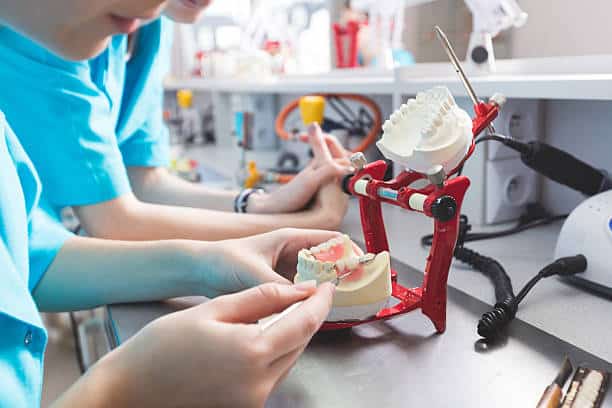
This is the part most denture guides skip, and it is where the real difference in day-to-day life shows up. Dental implants act like tooth roots — they anchor the denture and preserve the jawbone underneath, which is the bone that shrinks away under a conventional denture and slowly makes it loose.
There are two levels of it:
- Snap-on / implant-retained overdentures click onto two to four implants. No adhesive, no slipping, and you still take it out at night to clean. This is especially transformative for lower dentures, which are the unstable ones. Our snap-on dentures guide covers how they work in detail.
- Fixed full-arch (All-on-4 and All-on-6) permanently attaches a full set of teeth to four to six implants. It does not come out at all, and chewing function is closest to natural teeth. We compare the options in our guide to full mouth dental implants.
If you are weighing dental implants and dentures against each other, it helps to know they are not opposites. Most of what we place is a combination: the denture supplies the teeth, the implants supply the stability. You can also start with a conventional denture now and add implants later, provided the denture was designed with that in mind — worth saying out loud at your first appointment if cost is the reason for staging it.
Can You Really Get Dentures in One Day?
Partly, and the distinction matters. What can be delivered quickly is an immediate denture — one made in advance from impressions taken before your extractions, so you never go without teeth. That is genuinely valuable and it is a real option.
What it is not is your final denture. Gums and bone reshape significantly in the months after extractions, so an immediate denture needs relining, and often replacing, once your mouth has settled. Any “one day dentures” offer should be clear about which of the two you are being quoted for. If it is not clear, ask directly.
How Long Does Each Option Take?
- Traditional dentures: typically four to six weeks, including impressions, try-ins and delivery.
- Implant-retained dentures: typically three to six months, because the implants need time to integrate with the bone before they can carry a load.
You get a realistic timeline at your consultation rather than a generic one, because extractions, healing and bone grafting all shift it.
How Long Do Dentures Last?
Traditional dentures generally last five to seven years before they need replacing — not because the denture wears out, but because your jaw shape changes underneath it. Implant-supported dentures typically last ten to fifteen years or more with proper care, partly because the implants slow the bone loss that changes the fit in the first place.
Precise fit and better materials extend both numbers. A denture that fits properly from day one takes less abuse than one you are constantly adjusting to.
How Much Are Dentures?
There is no single price, and any figure quoted before someone has looked in your mouth is a guess. The things that actually move the number:
- Partial or full, and whether it is one arch or both
- Whether implants are involved, and how many
- Whether extractions, bone grafting or an immediate denture are needed first
- Materials, and the level of custom design work
What we can tell you plainly is the long-run economics. Conventional dentures cost less upfront but need adhesives, relines and periodic replacement, and the bone loss underneath continues. Implant-supported options cost more at the start and hold their fit far longer. Which one is better value depends entirely on your situation — which is exactly what the consultation is for.
Financing is available through CareCredit and Cherry, and you can read more on our financing and insurance page. For a sense of how we break costs down in writing, see our guide to dental implant costs in Washington State.
Does Medicare Cover Dentures?
No — Original Medicare does not cover dentures. Medicare states plainly that it “doesn’t cover dental services like routine cleanings, fillings, tooth extractions (removals), or items like dentures and implants.” You can read the current position on the Medicare dental services page.
Two things are worth checking anyway. Some Medicare Advantage (Part C) plans add a dental benefit, and what they cover varies a great deal by plan — read your own plan documents rather than assuming. And separately, some dental plans provide partial coverage, while medical insurance may contribute when tooth loss resulted from an accident or a medical condition. Bring your plan details to your consultation and our team will check what applies to you.
What Denture Before-and-After Photos Actually Tell You
Before-and-after galleries are useful, but read them for the right things. Anyone can photograph a white set of teeth. What is worth looking at:
- Do the teeth suit the face? Proportion and shape matched to the person’s age reads as real. Uniform, oversized white teeth do not.
- Lip support. Look at the profile shot. A well-designed denture restores the facial support that tooth loss takes away; an under-designed one leaves the mouth looking sunken.
- The gum line. Natural gum tissue is not one flat pink. Blended, varied gum coloring is a sign of custom work.
- Whether partial cases show the clasps. On a good partial, you should struggle to spot where the denture stops and the natural teeth start.
Results vary from person to person, and photos are illustrative rather than a promise — but they are a fair way to judge whether a practice’s design work matches what you are hoping for.
What to Expect During Denture Treatment
- Consultation. Dr. Yoon examines your mouth, discusses your goals, and recommends the option that fits your tooth loss, bone condition and budget.
- Digital impressions. No goopy trays and no gagging — the scan is quick and far more comfortable than traditional molds.
- Design. Built around your facial aesthetics, bite mechanics and your own preferences for tooth shape and color.
- Try-in. You try the denture before it is finished, so fit, appearance and bite can be adjusted while changes are still easy. This step is the one most worth insisting on anywhere you go.
- Final fitting and adjustments. Delivery, comfort checks, and the minor adjustments that are normal while you adapt.

Questions Worth Asking at Your Consultation
- Given my remaining teeth, why this option rather than the alternative?
- If I keep these teeth, how long do you expect them to last?
- Is there a try-in stage before anything is final?
- Could this denture accept implants later if I want more stability?
- What does the maintenance schedule look like, and what does a reline involve?
Frequently Asked Questions
What Is the Difference Between Full and Partial Dentures?
Full dentures replace all teeth in an upper or lower arch and rest on the gums. Partial dentures replace several missing teeth and attach to your remaining natural teeth, or to implants, for stability.
Can I Have a Partial on Top and a Full Denture on the Bottom?
Yes, and it is common. Each arch is assessed separately, because tooth loss rarely happens evenly.
Do Partial Dentures Damage the Teeth They Attach To?
A well-designed partial distributes force evenly and should not. A poorly balanced one puts repeated stress on the anchor teeth, which is why design and fit matter more than materials here.
Are Implant-Retained Dentures Removable?
Snap-on implant-retained dentures are — they stay firmly attached during the day and come out for cleaning. Fixed full-arch options like All-on-4 and All-on-6 do not come out at all; only your dentist removes them for maintenance.
How Long Do Dentures Last?
Traditional dentures typically last five to seven years as your jaw shape changes. Implant-supported dentures typically last ten to fifteen years or more with proper care.
Does Medicare Cover Dentures?
No. Original Medicare does not cover dentures or implants. Some Medicare Advantage plans include a separate dental benefit, and coverage varies by plan, so check your own plan documents.
Can Dentures Improve Chewing?
Yes, especially implant-retained or implant-supported options, which restore far more stability and bite force than suction alone. Many patients get back to foods they had given up.
Find Out Which One You Need
The fastest way to settle the partial-versus-full question is a consultation and an exam, so the recommendation is built around your remaining teeth and your bone rather than a general rule. Dr. Yoon is a prosthodontist — the specialty dedicated to replacing teeth — and has placed more than 5,000 implants, designing the denture and the implant plan together rather than separately.
You can see every option side by side on our dentures page for Des Moines and Lynnwood, or book directly at our Des Moines office on (253) 838-4363 or our Lynnwood office on (425) 775-1800.
Schedule a consultation and leave with a clear, personalized plan — including what insurance covers and what financing looks like.