
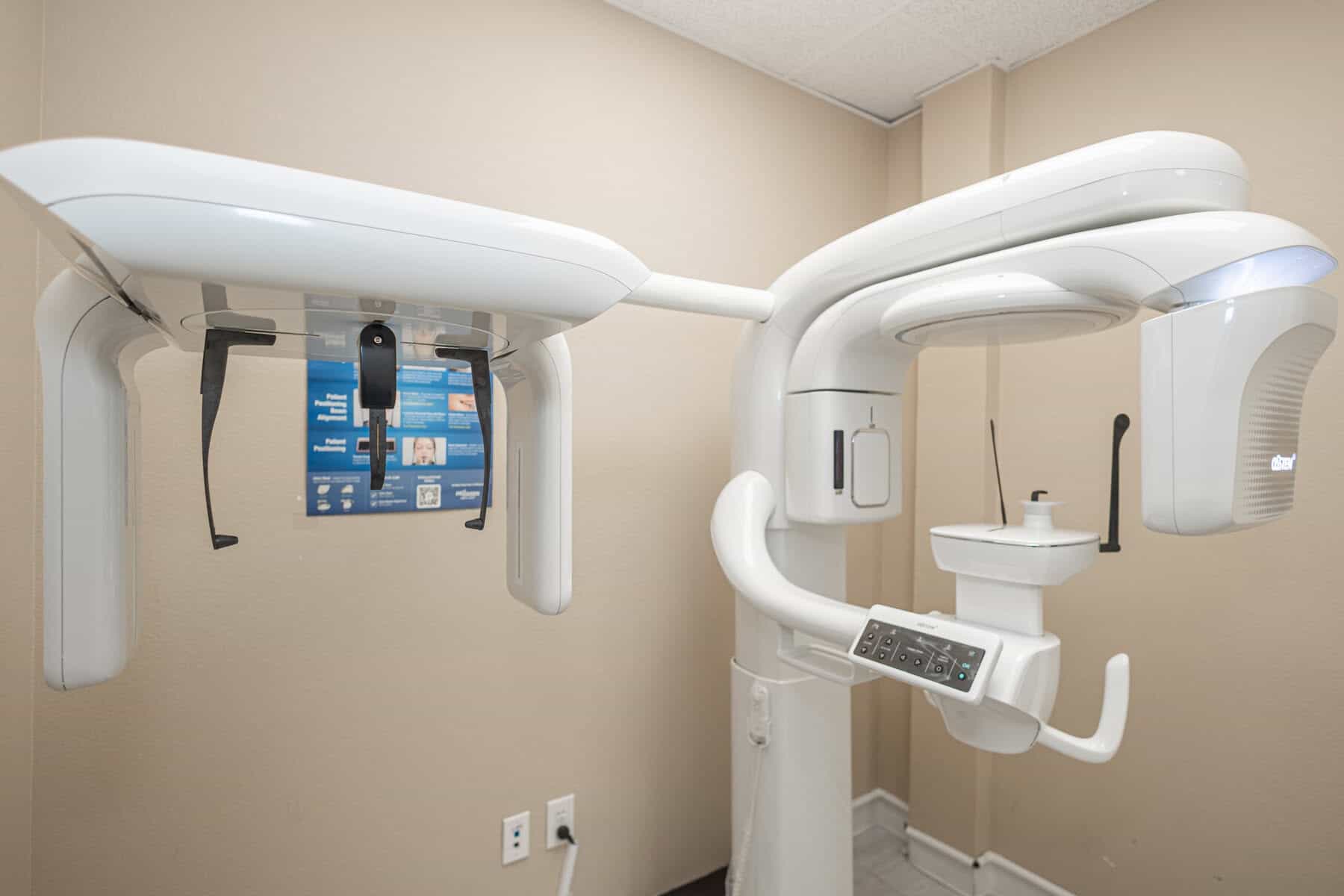
Morning headaches, clicking when you eat, grinding at night — most people suffer for years because the symptoms get treated without diagnosing the cause. We use CBCT imaging and digital bite analysis to find what’s actually wrong, then fix it.

TMJ is the hinge connecting your jaw to your skull; when it or the surrounding muscles misbehave, it’s called TMD. Bruxism is grinding or clenching, usually during sleep.
Classic symptoms many people don’t realize are connected:
TMD rarely has just one cause — it’s usually bite position, muscle tension, joint inflammation, tooth wear and stress-related clenching combined. Solving it takes expertise in all of them.
Request an Evaluation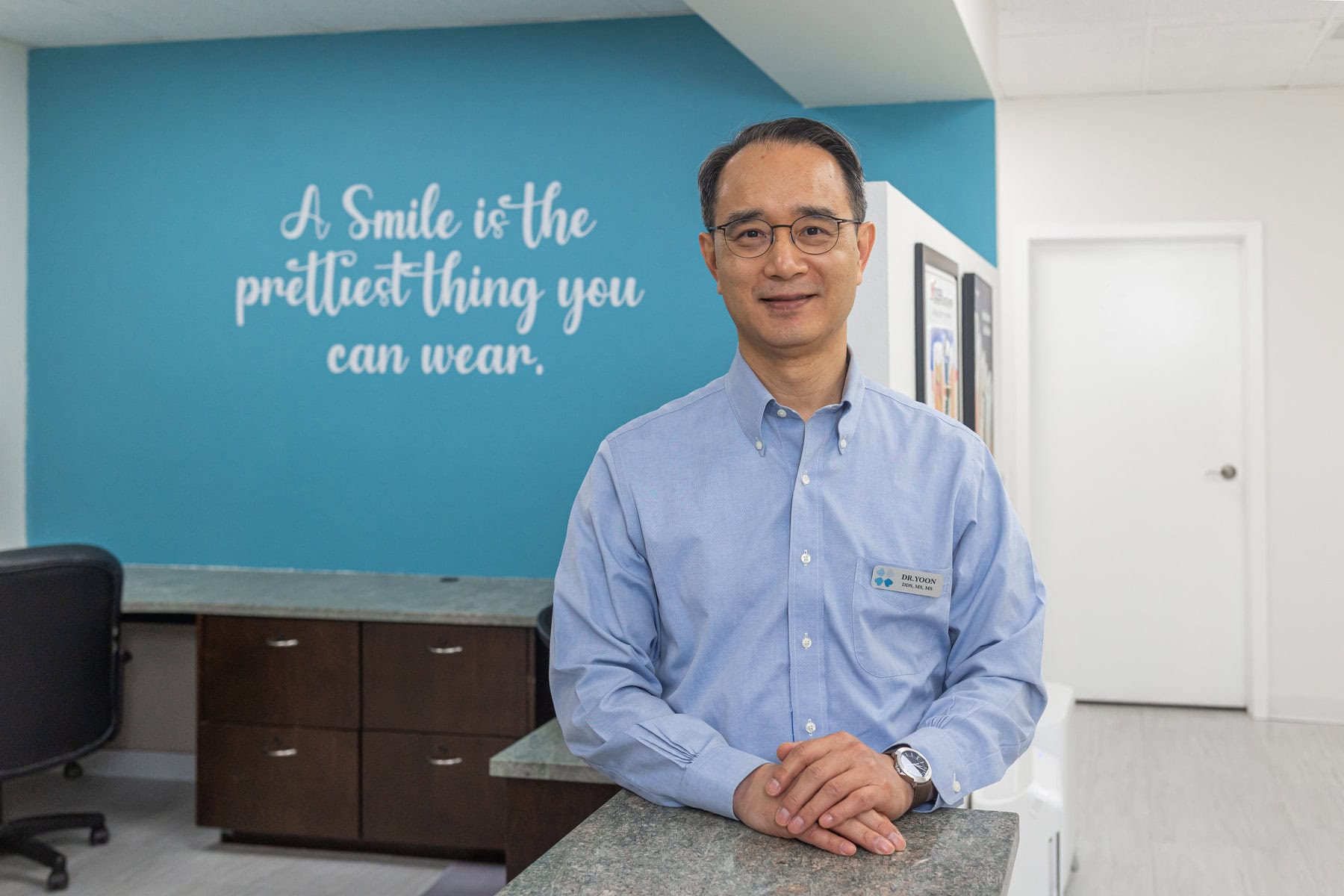
Standard dental X-rays show teeth — they don’t show jaw joints. Our diagnostics do.
CBCT 3D imaging captures a three-dimensional view of your temporomandibular joints — bone changes or arthritis, disc displacement, abnormal condyle positioning, structural asymmetries.
Digital bite analysis measures exactly how your bite functions: where pressure concentrates, which teeth contact first, whether one side works harder than the other. You can’t fix what you can’t measure.
We identify the root cause, then address it with the right treatment — starting with the least invasive, most reversible options.
Injected into overactive jaw muscles, therapeutic Botox reduces clenching force, decreases tension and often significantly improves headaches — relief within days, lasting 3–4 months per treatment. Lower doses and different sites than cosmetic Botox: functional outcomes.
Nightguards protect teeth from grinding wear; occlusal splints go further — stabilizing bite position, reducing joint stress and letting muscles relax. Both custom-fitted; the drugstore guard is not the same thing, and can make symptoms worse.
When crowding or crossbites force the jaw into awkward positions, correcting alignment — often with Invisalign — eliminates the structural cause of jaw pain rather than masking it.
Even tiny high spots throw off an entire bite — one tooth contacting too early makes the jaw compensate for years. Carefully reshaping those spots rebalances the bite: precise, conservative, often immediate relief.
Step by step, from symptoms to a clear plan — and clear answers.
History and symptom timeline, tooth wear patterns, muscle palpation for trigger points, range-of-motion and joint sounds — the hands-on context imaging can’t reveal.
3D joint imaging and measured force distribution give objective data to confirm the clinical diagnosis.
What’s causing your TMD or bruxism, how it’s affecting teeth, joints and muscles, and which approach makes sense — with a realistic timeline.
Splint or nightguard, therapeutic Botox if muscle tension is significant, lifestyle changes, PT or massage referral when appropriate — more involved treatment only if conservative care isn’t enough.
Untreated TMD leads to increased tooth wear, joint damage and chronic pain — and unchecked bruxism can grind teeth down to where they need crowns. Early intervention is easier and less expensive:
Dr. Yoon’s prosthodontic expertise in bite mechanics means specialized care — not guesswork.
Usually a combination: bite misalignment, muscle tension from stress or clenching, joint inflammation or arthritis, trauma, and habitual grinding. Rather than guessing, we use diagnostic imaging and functional analysis to identify what’s actually driving your symptoms.
Waking with jaw soreness or headaches, worn or flattened teeth, chipped enamel, increased sensitivity, or a partner hearing grinding at night. Dr. Yoon can identify grinding wear patterns during your exam even if you’re unaware you do it — don’t wait until enamel is gone or a tooth fractures.
If grinding is causing wear, pain or damage to dental work — yes. But the type of appliance matters: a protective nightguard, a repositioning splint, or Botox alongside, depending on your diagnosis.
Yes — Botox has been used therapeutically for decades, at doses much lower than cosmetic applications. Administered by a trained professional, side effects are rare and typically minor, and many patients get significant relief when other treatments haven’t fully worked.
Not always — but when bite misalignment is a primary contributor, correcting it is the most effective long-term solution. Many adults find Invisalign resolves jaw pain they’ve carried for years. Dr. Yoon assesses whether your bite is genuinely the driver first.
Clinical assessment of jaw function, muscle palpation, bite evaluation, CBCT 3D imaging of the joints and digital bite analysis — plus your history, symptom timeline and past treatments. The goal is understanding the cause, not just cataloguing symptoms.
It depends on cause and severity: some patients feel significant relief within weeks from a nightguard or Botox; complex bite issues may need months of orthodontic or occlusal therapy. Most patients notice improvement fairly quickly even when full resolution takes longer.
Yes — increased tooth wear, joint damage, chronic pain, and progressive difficulty opening or closing. Joint inflammation compounds over time, making treatment more complex. Early intervention is almost always easier and cheaper.
Nightguards and occlusal splints are often covered under dental insurance; Botox for TMJ may be covered medically when deemed necessary; orthodontic coverage varies. We provide documentation to support claims and recommend verifying with your provider first.
For most patients, yes — a properly designed occlusal splint stabilizes the bite, reduces muscle tension and protects teeth. Less soreness, fewer headaches and reduced sensitivity typically show within the first few weeks. The key is design and calibration, not a generic mouthguard.
22030 7th Ave South #100
Des Moines, WA 98198
| Office Hours | |
|---|---|
| Monday | 8:00 am – 3:30 pm |
| Tuesday | 8:00 am – 3:30 pm |
| Wednesday | Closed |
| Thursday | 8:30 am – 4:00 pm |
| Friday | Closed |
4215 198th Street SouthWest #205
Lynnwood, WA 98036
| Office Hours | |
|---|---|
| Monday | Closed |
| Tuesday | Closed |
| Wednesday | 9:00 am – 4:00 pm |
| Thursday | Closed |
| Friday | Closed |
Book your comprehensive TMJ evaluation — CBCT imaging, digital bite analysis, and a targeted plan that treats the cause, not just the symptoms.