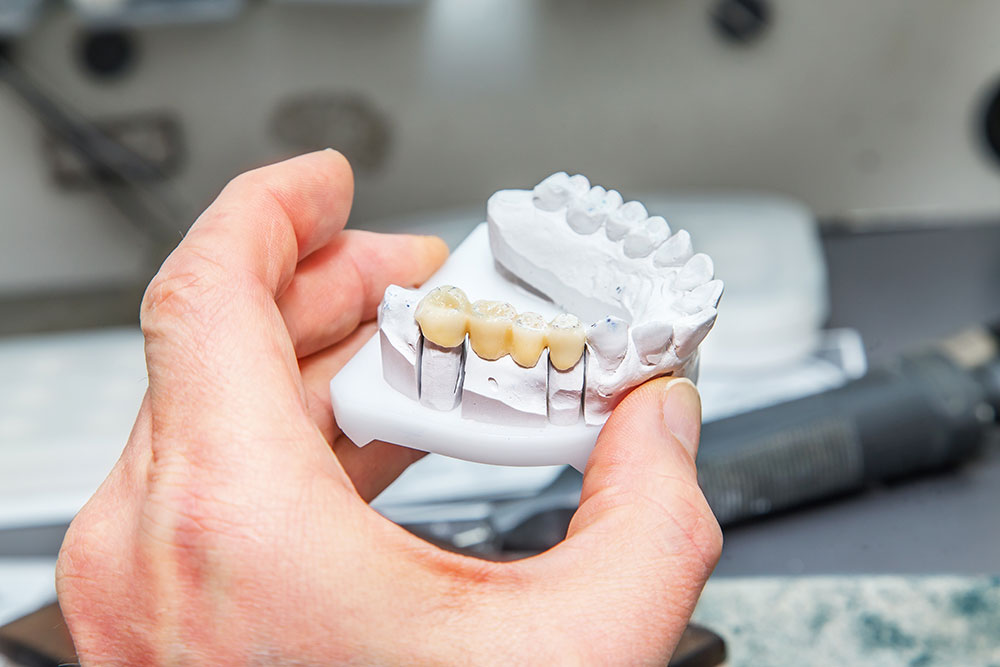
A bridge closes the gap left by a missing tooth with a replacement cemented in place — nothing to remove, nothing that moves when you eat. Conventional and implant-supported designs, placed by a prosthodontist.

A replacement tooth — the pontic — joined to crowns on the teeth either side of the gap (or to implants), cemented in as one piece.
Leaving a gap is rarely neutral: the teeth beside it drift, the opposing tooth drops down, chewing load lands on teeth not designed to take it, and the bite gradually changes. The consultation is where we decide honestly whether a bridge, an implant or a partial denture is the best fit for your mouth.
Four designs in common use — and they’re not interchangeable. The right one depends on where the gap is, the bite force there, and the teeth beside it.
The standard design: teeth on both sides of the gap are crowned, and the replacement tooth is joined between them. The trade-off — two teeth are prepared for crowns — matters least when those teeth already need crowns anyway.
Supported on one side only, for gaps with a usable tooth on just one side. All force passes through a single support, so it’s limited to low-load positions — exactly the judgement prosthodontic training is built for.
The replacement tooth rides on thin wings bonded to the neighboring teeth — the most conservative bridge there is. Not for heavy chewing, and often the right holding solution for a younger patient awaiting an implant.
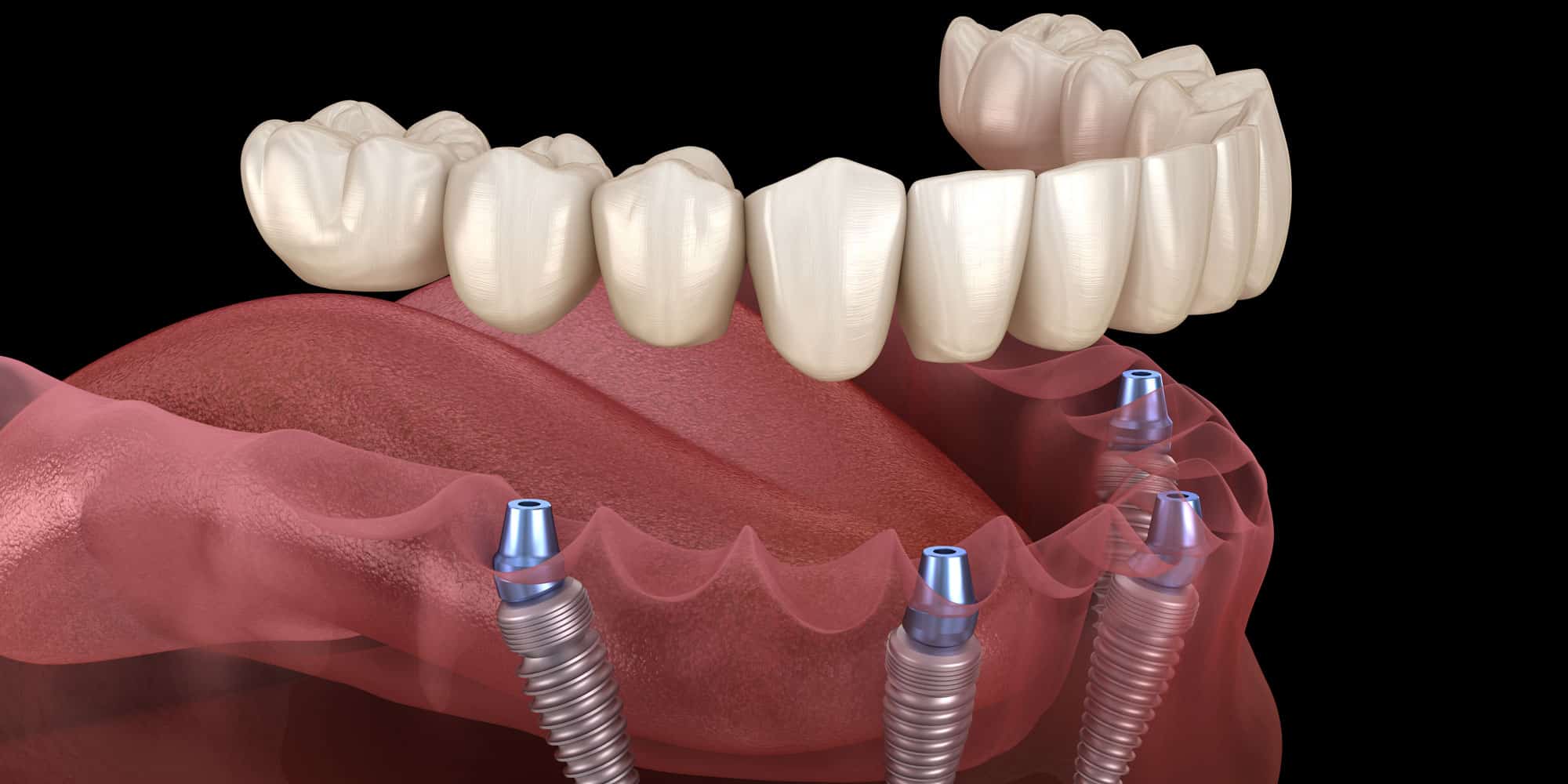
Anchored to implants in the jawbone — your natural teeth are untouched, the implants preserve ridge bone, there’s no tooth underneath to decay, and it can span three or more missing teeth.
Dr. Yoon places both, so there’s no in-house bias in the recommendation. At the consultation you’ll see your own X-rays and scan, and we’ll walk through both options against your situation.
If two options are genuinely reasonable, we’ll say so and give you the trade-offs — not a single sales answer. Compare dental implants in detail.
Get an Honest Recommendation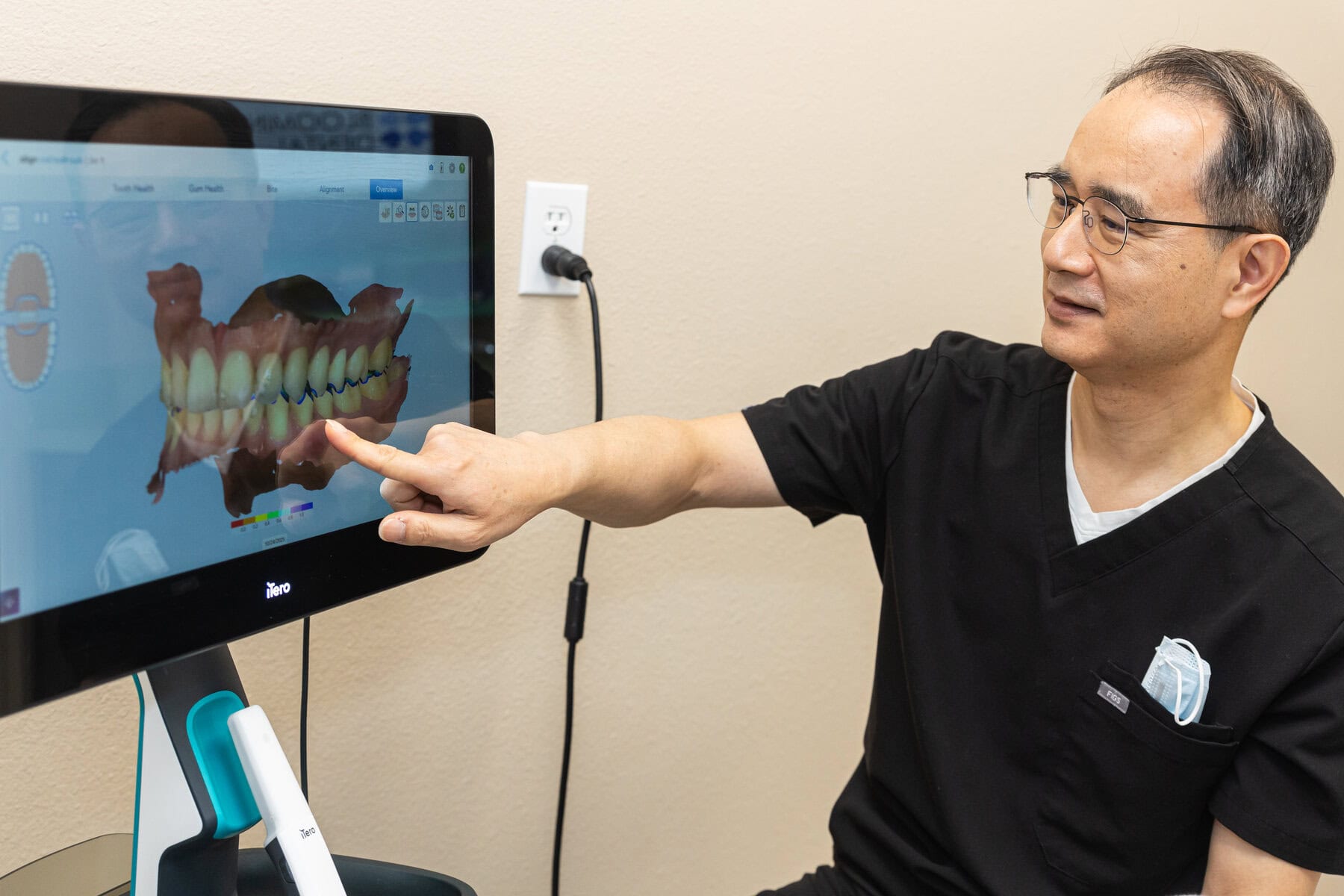
Most conventional bridges are completed in two appointments a few weeks apart — and the gap is never visible in between.
The gap, neighboring roots, bone and bite examined — and bridge vs implant compared honestly using your own images, with a written estimate.
Numbed and shaped conservatively — and if a supporting tooth needs a build-up or root canal first, it’s done now, not discovered later.
The iTero scan goes straight to the laboratory with nothing to distort in transit; you wear a temporary bridge for two to three weeks.
Full seating, natural-light shade check, gum contour under the pontic, floss threader passing cleanly — then the bite is adjusted and it’s cemented. We show you exactly how to clean under it before you leave.
A bridge doesn’t decay — but the teeth holding it up can. Daily cleaning under the bridge is what decides how long it lasts.
Because the units are joined, you can’t floss between them — you clean underneath instead, once a day:
 Written Estimate Before Treatment
We don’t quote a figure before examining the tooth — these are what actually move the price:
We verify your benefits, give you a written estimate before treatment starts, and offer CareCredit, Cherry, LendingClub and HFD financing.
A fixed restoration that replaces one or more missing teeth: the replacement tooth (pontic) is joined to crowns on the teeth either side of the gap, or to implants. Unlike a partial denture, it’s cemented in place — it doesn’t come out and doesn’t move when you eat or speak.
Conventional bridges most often replace one or two adjacent teeth — the further a bridge reaches, the more force the supporting teeth carry. For three or more missing teeth in a row, an implant-supported bridge is usually the better answer because implants share the load.
A crown restores one damaged tooth still in your mouth; a bridge replaces a tooth that’s already gone. A bridge is actually built out of crowns — which is why crown and bridge work is one discipline within prosthodontics.
An implant replaces the root as well as the tooth, preserving bone and leaving neighbors untouched — the first choice for most single missing teeth where bone and health allow. A bridge is often better when the neighbors already need crowns, bone is inadequate, surgery is unwise, or you need the gap closed faster. Dr. Yoon places both, so the recommendation isn’t driven by what the practice can offer.
Well-made bridges commonly last 10–15 years, many considerably longer; implant-supported bridges longer still, since there’s no natural tooth underneath to decay. Almost every bridge that fails does so from decay or gum disease at a supporting tooth — daily cleaning underneath matters most.
Use a floss threader, superfloss or an interdental brush to pass under the pontic once a day — a water flosser makes it much easier. We’ll show you the technique at the fitting appointment and check the area at every hygiene visit.
You’re numb while the supporting teeth are prepared. Some gum tenderness and mild sensitivity for a few days afterwards is normal, and nitrous oxide sedation is available if dental treatment makes you anxious.
Usually two: preparation and scan at the first (you leave with a temporary), then try-in, adjustment and cementation two to three weeks later. Implant-supported bridges take longer overall because the implants need months to integrate first.
A resin-bonded bridge that holds the replacement tooth on thin wings bonded to the back of the adjacent teeth — preserving far more natural tooth structure. It suits a single missing front tooth with a light bite; it’s not strong enough for the back of the mouth.
It should be impossible to identify. Shade is matched before treatment starts, and the gum contour under the replacement tooth is shaped so it looks like it’s emerging from the gum — the aesthetics of replacement teeth are core prosthodontic training, not an afterthought.
22030 7th Ave South #100
Des Moines, WA 98198
| Office Hours | |
|---|---|
| Monday | 8:00 am – 3:30 pm |
| Tuesday | 8:00 am – 3:30 pm |
| Wednesday | Closed |
| Thursday | 8:30 am – 4:00 pm |
| Friday | Closed |
4215 198th Street SouthWest #205
Lynnwood, WA 98036
| Office Hours | |
|---|---|
| Monday | Closed |
| Tuesday | Closed |
| Wednesday | 9:00 am – 4:00 pm |
| Thursday | Closed |
| Friday | Closed |
A missing tooth doesn't stay a single problem for long — the teeth around it shift and your bite changes. Book a consultation and see your own X-rays before deciding.