If you have been putting off replacing a missing tooth because nobody will give you a straight answer on price, here it is: in Washington, a single dental implant with its crown typically runs $3,000 to $6,000 all-in. Implant-supported snap-on dentures generally range from about $6,000 to $15,000 per arch nationally, and fixed full-arch implants (the “All-on-4” style) from about $15,000 to $30,000+ per arch. In the Puget Sound area, quotes often land in the middle to upper part of these ranges.
Those are honest planning ranges, not quotes — and the gap between the low and high end is not padding. It reflects real differences in what is included, how complex your mouth is, and who plans the work.
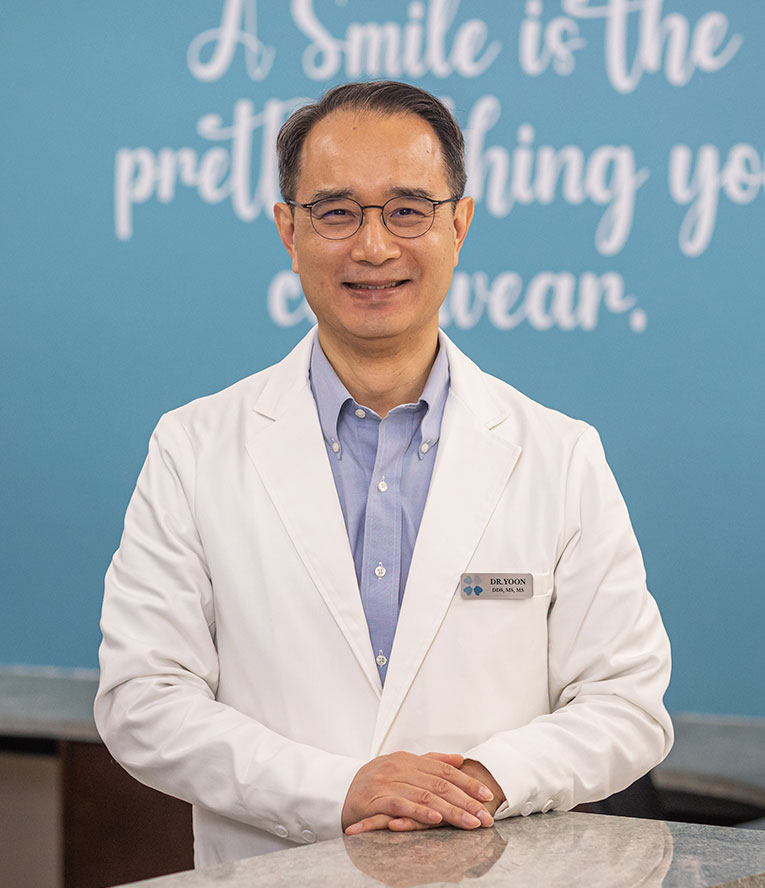
This guide comes from the team at Blooming Dental, led by Dr. Sung Wook Yoon — a Columbia-trained prosthodontist and former Harvard School of Dental Medicine clinical instructor who has placed more than 5,000 implants over 30+ years. Below is exactly what drives an implant quote in Washington, so you can compare estimates with confidence.
The Short Answer: Typical Dental Implant Costs
| Treatment | Typical range | What it covers |
|---|---|---|
| Single dental implant | $3,000 – $6,000 | Implant post + abutment + crown for one tooth |
| Snap-on denture (implant-supported) | $6,000 – $15,000 per arch | 2–4 implants + a removable overdenture that clicks on |
| Fixed full-arch (All-on-X) | $15,000 – $30,000+ per arch | 4–6 implants + a fixed bridge that stays in permanently |
| Possible add-ons | Case-dependent | Extractions, bone grafting, sedation, temporary teeth |
These are planning ranges based on national reference figures — not quotes. Your written estimate comes after an exam and 3D imaging.
Worth knowing: as of this writing, Blooming Dental is running a single-implant special — implant, abutment, and crown for $2,999 (regularly $4,700). Check the dental implants page for current offer details.
Why Implant Quotes Vary So Much
You are paying for three parts, not one
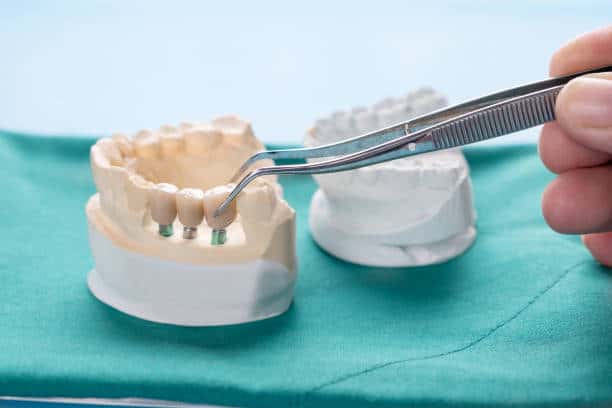
A “dental implant” is really three components: the titanium implant post that replaces the root, the abutment that connects everything, and the crown you actually chew with. Some offices advertise only the implant post and bill the abutment and crown separately — which is how a “$1,999 implant” becomes a $5,000 total. The Cleveland Clinic’s implant overview explains the anatomy of the full restoration well. When you compare quotes, always compare the all-in number for all three parts.
Your mouth sets the difficulty
Two patients can need the same tooth replaced at very different costs. If the tooth has been missing for years, the jawbone under it shrinks, and you may need bone grafting before an implant can hold. Upper back teeth sit close to the sinus, which sometimes requires a sinus lift. A failing tooth that still needs to be extracted adds another step. None of this is upselling — it is the difference between an implant that lasts decades and one that fails early.
Materials and the lab matter
Implant systems, abutment types, and crown materials are not interchangeable commodities. A zirconia or layered porcelain crown made by a quality lab costs more than a budget crown, and it shows — in how the tooth looks next to its neighbors and how it holds up under chewing. Fixed full-arch bridges have an even wider materials range, from acrylic-on-titanium to full zirconia.
Who plans and places it
Implant dentistry is not a regulated specialty by itself — a weekend-course dentist and a prosthodontist can both legally place implants. What differs is the planning. A prosthodontist is a specialist in tooth replacement who designs the final tooth first, then positions the implant to support it. Poorly positioned implants are the expensive kind: they lead to remakes, bone loss, and redo surgery. We covered this in detail in how a prosthodontist plans dental implants differently.
The Add-Ons: What Else Can Appear on Your Quote
Beyond the implant itself, these are the line items that most often appear on Washington implant estimates — ballpark figures only:
- Tooth extraction: commonly $150–$700 per tooth, depending on whether it is simple or surgical.
- Bone grafting: commonly $400–$3,000+, depending on the size of the graft; sinus lifts sit at the higher end.
- 3D CT scan and diagnostics: some offices bill imaging separately — ask. Blooming Dental uses in-house cone beam CT imaging for implant planning.
- Sedation: varies by type, from nitrous oxide to deeper sedation.
- Temporary tooth or denture: so you are never without a tooth while the implant heals.
A trustworthy office will hand you a written, itemized estimate before any treatment starts — that is standard practice at Blooming Dental, so there are no surprises mid-treatment.
Full-Arch Costs: Fixed All-on-X vs Snap-On Dentures
If you are missing most or all of the teeth in an arch, you have two main implant paths — at very different price points.
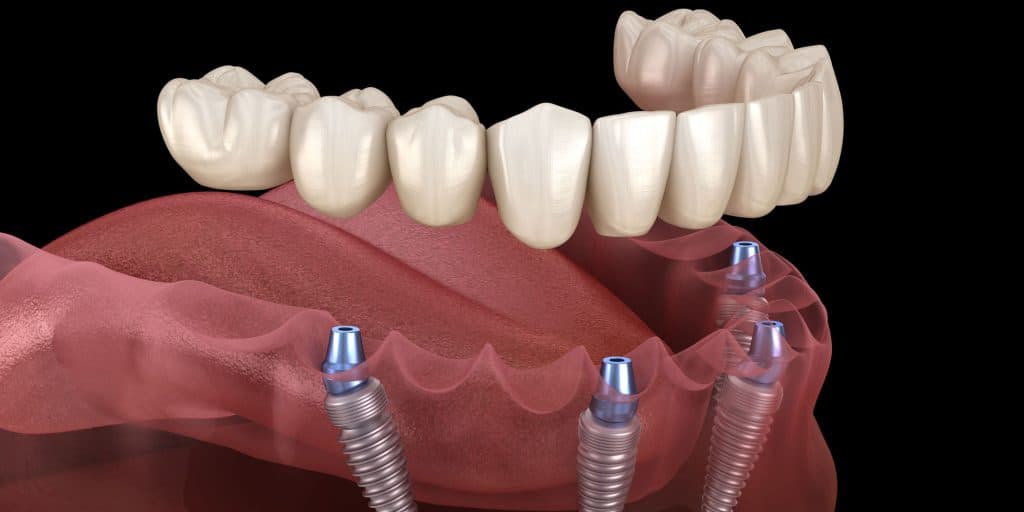
Fixed full-mouth dental implants anchor a permanent bridge on 4–6 implants. It never comes out, feels closest to natural teeth, and typically runs $15,000–$30,000+ per arch nationally. Snap-on dentures click onto 2–4 implants and are removable at night — dramatically more stable than a suction denture, at roughly $6,000–$15,000 per arch. Many patients who assume they cannot afford full-arch treatment are surprised to find the snap-on option within reach, and an existing denture can sometimes be converted.
Does Insurance Cover Dental Implants in Washington?
Sometimes — partially. Many PPO dental plans now treat implants as a major service, often covering a percentage of the crown or the surgery, but nearly all plans carry an annual maximum, commonly $1,000–$2,000. Some plans still exclude implants entirely while covering a bridge or denture instead. Medical insurance rarely helps unless tooth loss is tied to an accident or medical condition. The honest summary: insurance can take a useful bite out of the cost, but it rarely pays for most of it.

This is where financing does the heavy lifting. Blooming Dental accepts HSA and FSA funds and offers several financing options — CareCredit (with 6, 12, 18, and 24-month interest-free plans), Cherry, Lending Club (loans from $1,000 to $40,000), and HFD — plus cash discounts. The front desk will also verify your insurance benefits before treatment so you know exactly what your plan contributes.
Why the Cheapest Quote Is Not Always the Cheapest Implant
Implants have become a heavily advertised procedure, and teaser pricing is common. Before you drive across the Sound for a lower number, ask three questions:
- Is the abutment and crown included — or just the implant post?
- Who handles complications, and is the implant warrantied if it fails to integrate?
- Who is planning the case — and how many implants have they placed?
A failed or misplaced implant costs far more to fix than the price difference between quotes: think graft repair, implant removal, and starting over. Paying once for well-planned treatment is almost always cheaper than paying twice.
How a Prosthodontist Approaches Implant Pricing
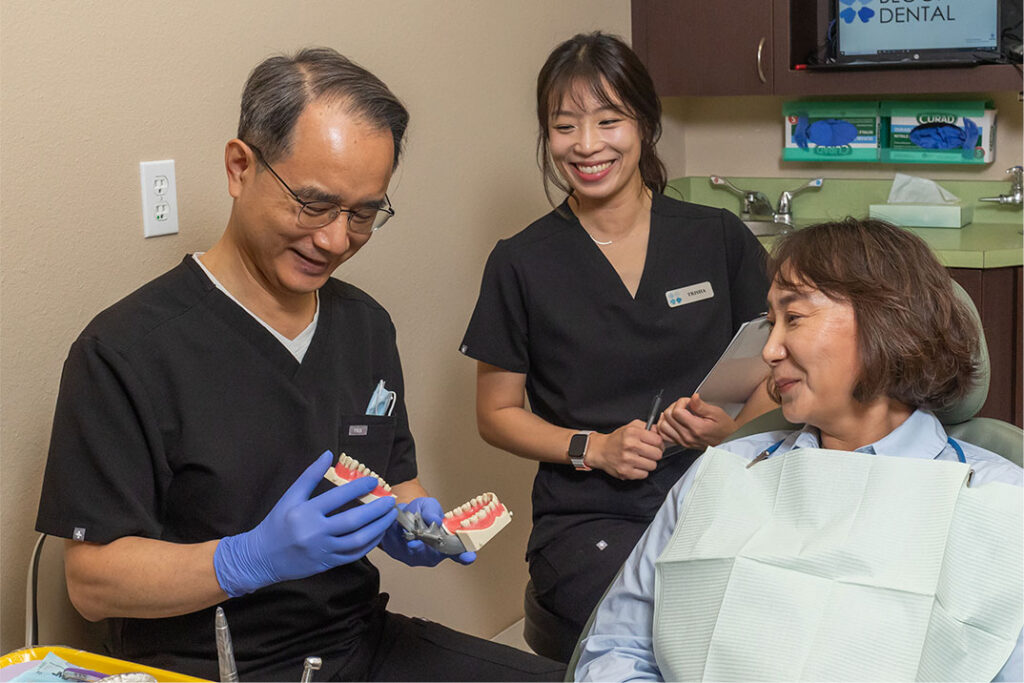
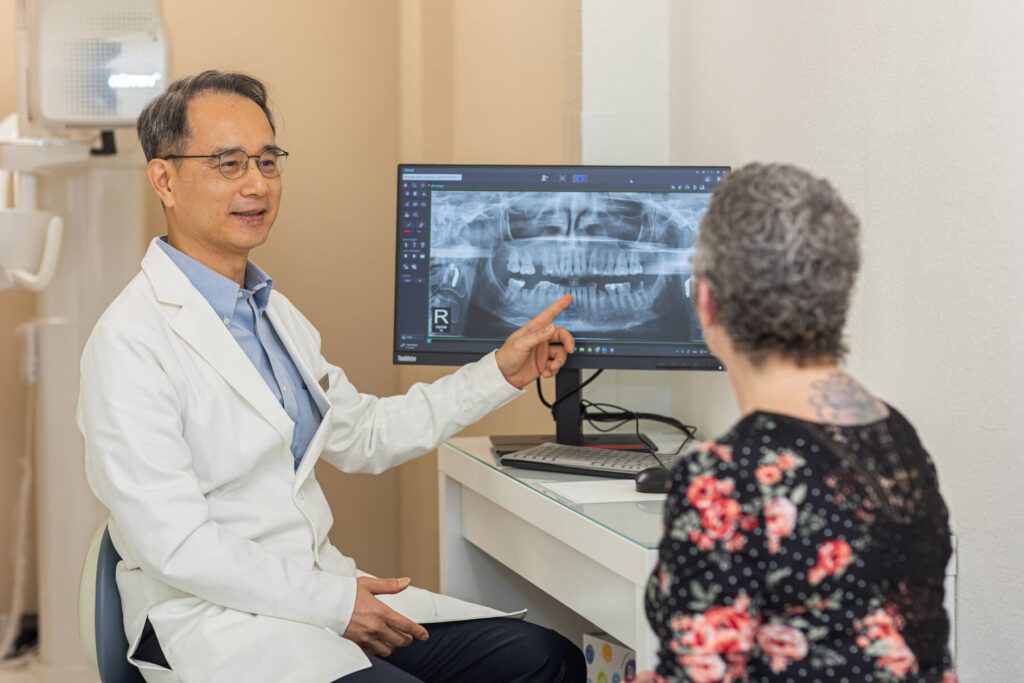
Prosthodontics is the dental specialty dedicated to restoring and replacing teeth — recognized by the American Dental Association alongside specialties like orthodontics and oral surgery. At Blooming Dental, Dr. Yoon plans every case from the final tooth backward: 3D imaging first, then implant position, then a written itemized estimate covering every phase. With 5,000+ implants placed, most complications that surprise other offices are things he has already planned around — which is exactly what keeps real-world costs close to the original estimate.
FAQs About Dental Implant Costs in Washington
How much does a single dental implant cost in Washington?
A single implant with its abutment and crown typically costs $3,000 to $6,000 all-in. As of this writing, Blooming Dental offers a single-implant special at $2,999 including the implant, abutment, and crown — see the dental implants page for current details.
How much do full-mouth dental implants cost?
Fixed full-arch implants (All-on-X) typically run $15,000 to $30,000+ per arch as a national reference range. Implant-supported snap-on dentures are the more budget-friendly full-arch option at roughly $6,000 to $15,000 per arch.
Does dental insurance cover implants?
Many PPO plans cover part of the treatment — often a percentage of the crown or surgery — but annual maximums of $1,000 to $2,000 limit how far that goes, and some plans exclude implants entirely. HSA and FSA funds can be used, and financing covers the remainder for most patients.
Why do implant quotes differ so much between offices?
Four reasons: what the quote includes (implant only vs implant, abutment, and crown), how complex your case is (grafting, extractions, sinus work), the materials and lab used, and who plans the treatment. Always compare all-in numbers, never the advertised starting price.
Are dental implants worth the cost compared to a bridge or denture?
For most patients who qualify, yes. An implant can last decades with good care, does not grind down neighboring teeth the way a bridge does, and preserves jawbone that a denture cannot. Bridges and dentures cost less up front but are typically remade every 10–15 years, so the lifetime cost gap is smaller than it looks.
Get a Real Number for Your Smile
Ranges are useful; a written estimate for your mouth is better. Schedule an implant consultation and leave with a clear, itemized plan — including what insurance covers and what financing looks like per month. Request an appointment at our Des Moines office or call (253) 838-4363, visit us in Lynnwood or call (425) 775-1800 — or start with the free 5-minute video consultation on our website. We serve patients across South King County and Snohomish County.
Schedule a consultation and leave with a clear, personalized plan — including what insurance covers and what financing looks like.