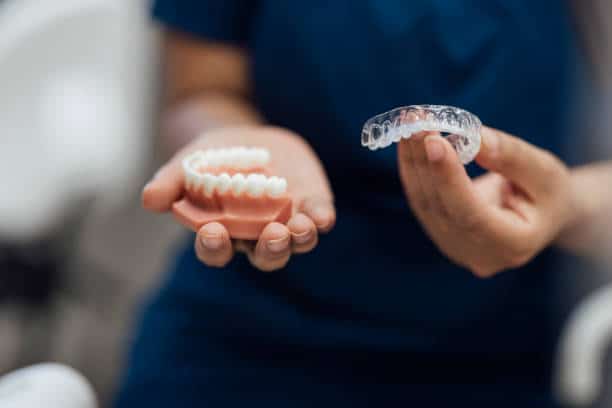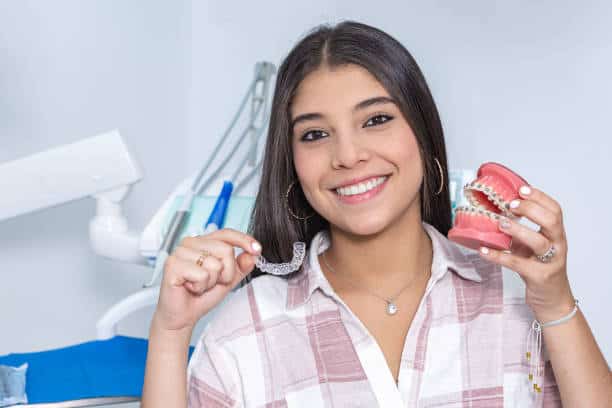
Invisalign planning with a prosthodontist is different because it looks past straight teeth alone. A prosthodontist also considers your bite, any crowns, veneers, or dental implants you already have, missing teeth, how your finished smile will look, and any restorative treatment you may need down the road before moving a single tooth. For patients in Des Moines, WA who have existing dental work or plans for future restorative or cosmetic treatment, this broader view can change how Invisalign is planned from the very first visit.
This matters most for adults whose situation is not simple. If you have crowns, bridges, implants, worn teeth, or you are thinking about veneers or a smile makeover, the way your teeth move with Invisalign treatment in Des Moines can affect how well those other treatments turn out later.
How Is Invisalign Planning Different from a Prosthodontist?
A Prosthodontist Looks Beyond Straight Teeth
Straight teeth are part of the goal, but they are not the whole goal. A prosthodontist also looks at how your teeth come together when you bite down, how much wear your teeth already show, and whether any restorations are planned for the future.
This matters because tooth position affects more than appearance. It affects chewing comfort, jaw strain, and how well crowns, bridges, or implants will fit and function once they are in place. It also plays a role in how the final smile looks, since the position of each tooth shapes the overall design once treatment is complete.
Invisalign Is Planned Around the Final Dental Outcome
Before recommending an Invisalign treatment plan, a prosthodontist asks a series of questions that a straightforward cosmetic consultation might skip:
- Will the patient need crowns in the near future?
- Will veneers be placed once alignment is complete?
- Is space needed for a dental implant?
- Are the teeth worn or showing signs of damage?
- Is the bite stable, or does it need to be addressed first?
The answers shape where teeth move, how much they move, and in what order treatment happens.
The Goal Is Alignment That Supports Function and Restorative Care
The result should do more than look good in photos. Alignment that supports a stable bite and sets up future restorative work tends to hold up better over time than alignment planned in isolation. This is the core idea behind prosthodontist-led Invisalign planning: tooth movement and long-term dental health are planned together, not separately.
Why Bite Alignment Matters Before Invisalign
Teeth Need to Meet Evenly After Treatment
When you bite down, your upper and lower teeth should meet in a way that spreads chewing pressure evenly. If teeth move during Invisalign treatment without attention to how they meet, some teeth can end up carrying more force than others.
According to the American Dental Association, a bad bite, or malocclusion, can occur even when teeth appear relatively straight, since the upper and lower jaws may not meet properly. This is part of why bite evaluation is a routine part of orthodontic and aligner planning, not an extra step.
Bite Problems Can Affect Crowns, Veneers, and Implants
If teeth are moved without factoring in future restorations, the resulting bite can create problems for those restorations later. A crown placed on a tooth that now carries uneven chewing force may wear faster. A veneer bonded to a tooth with an unstable bite may be more prone to chipping. An implant restoration can be affected as well, since an uneven bite can place extra pressure on the implant crown and the surrounding teeth. This is why bite planning and restorative planning need to happen together rather than in separate conversations.
Invisalign May Help Prepare the Bite for Future Dental Work
In some cases, Invisalign can help prepare the mouth for other treatment rather than working against it. Examples include:
- Invisalign before crowns, to improve tooth position ahead of restoration
- Invisalign before veneers, to support a more predictable cosmetic result
- Invisalign before implants, to help create appropriate spacing
- Invisalign before full mouth reconstruction, as one early step in a larger plan
Each of these depends on the individual case, which is why an evaluation with a prosthodontist is the starting point rather than a guess.
Invisalign With Crowns, Bridges, or Previous Dental Work
Can You Get Invisalign If You Have Crowns?
Many patients with crowns can still be candidates for Invisalign. Crowns need to be evaluated first, since they can affect how attachments are placed, how much a tooth can safely move, and how the bite will be affected once treatment is complete.
Can You Get Invisalign If You Have a Bridge?
A dental bridge does not move the same way individual natural teeth do, since it connects to the teeth on either side of a gap. This means aligner planning around a bridge requires more careful mapping of what can shift and what needs to stay in place.
Why Existing Dental Work Changes the Invisalign Plan
Existing crowns, bridges, and restorations affect several parts of the plan, including where attachments go, how far teeth can safely move, how the bite will settle, and the current condition of each restoration. None of these factors are unusual to plan around, but they do mean the treatment plan looks different from a case with no prior dental work. Patients with restorations already in place can review options for dental crowns and bridges to understand how existing work factors into a new treatment plan.
Invisalign With Dental Implants or Missing Teeth
Dental Implants Do Not Move Like Natural Teeth
This is one of the most important facts to understand before starting Invisalign with existing implants. Natural teeth respond to gentle, sustained pressure and shift gradually. Dental implants do not, because they are anchored directly into the jawbone rather than held in place by the same ligament structure as a natural tooth.
Because of this, an Invisalign plan has to work around implant position rather than attempt to shift it.
Invisalign Before Implants May Help Create Better Spacing
For patients who are missing a tooth and planning to get an implant, Invisalign can sometimes help create more accurate spacing before the implant is placed. This depends on the size of the gap, the surrounding bite, and the overall restorative plan, so it is evaluated case by case rather than assumed. Getting this spacing right also matters for the implant crown that will eventually go in that space, since a well-planned gap helps the finished crown fit naturally alongside the surrounding teeth.
Missing Teeth Require Restorative Planning, Not Just Alignment
Missing teeth are not only an alignment issue. They also affect chewing function, the position of neighboring teeth over time, and the long-term plan for tooth replacement. Patients considering dental implants alongside Invisalign benefit from having both treatments planned together from the start rather than treated as separate, unrelated decisions. A prosthodontist’s evaluation can help determine the right order for aligning teeth, placing an implant, and completing any restorative work in between.
Invisalign Before Veneers, Bonding, or a Smile Makeover
Aligning Teeth First May Improve Cosmetic Results
For patients planning veneers or bonding, tooth position matters before the cosmetic work begins. Straightening teeth first can give the cosmetic dentist a more predictable, even foundation to design around.
Invisalign May Reduce the Need for More Aggressive Cosmetic Changes
In some cases, improving tooth position with Invisalign first may allow for a more conservative cosmetic approach later. This is not guaranteed for every patient, since the right approach depends on the condition of the teeth and the goals of the case, but it is worth discussing during a consultation.
Smile Design Should Consider Tooth Position, Shape, Color, and Bite
A smile makeover works best when tooth position, shape, color, and bite are all considered together rather than one at a time. Invisalign can play a role early in that process, particularly for patients planning cosmetic dentistry and smile design as part of a broader treatment goal.
Invisalign Before Full Mouth Reconstruction
Some Complex Cases Need Tooth Movement Before Final Restorations
For patients with more complex dental needs, moving certain teeth before placing final crowns, bridges, implants, or veneers can make the rest of treatment more predictable. This step is not necessary for every case, but it is worth evaluating when several types of restorative work are being planned at once.
Treatment Sequence Matters in Complex Dental Care
Doing treatments in the wrong order can create extra work later. For example, placing a final crown before addressing a bite or spacing issue may mean redoing that crown once the bite changes. Planning the sequence helps avoid that kind of inefficiency.
A Prosthodontist Can Plan Invisalign as One Step in a Larger Treatment Plan
For patients considering full mouth reconstruction, Invisalign does not have to stand alone. It can be positioned as one phase of a longer treatment plan, timed to support the crowns, bridges, or implants that come after it.
What Types of Patients Benefit from Prosthodontist-Led Invisalign Planning?
Adults With Crowns, Veneers, Bridges, or Implants
If you already have restorative or cosmetic work in your mouth, that work needs to be factored into any Invisalign plan. It affects what can move, how far, and what the result will look like.
Adults With Missing Teeth or Implant Plans
Patients missing one or more teeth benefit from having Invisalign and implant planning considered together, particularly when spacing for a future implant is part of the goal. For these patients, alignment is really the first step toward a tooth replacement plan, not a separate, unrelated treatment.
Adults With Worn Teeth or Bite Problems
Worn teeth or a bite that feels unstable are signs that alignment and bite function should be evaluated together, not addressed with straightening alone.
Adults Planning Cosmetic Dentistry
Patients thinking about veneers, bonding, whitening, or a broader smile makeover benefit from having tooth position addressed first, so the cosmetic results have a stable foundation to build on.
What Happens at an Invisalign Consultation with a Prosthodontic Focus?
Your Teeth, Bite, and Existing Dental Work Are Evaluated
A consultation starts with a full look at your current teeth, crowns, bridges, implants, veneers, fillings, missing teeth, tooth wear, and bite. This gives a complete picture before any treatment plan is proposed.
Digital Scans Help Map Tooth Movement
Digital scanning technology allows for a detailed simulation of how teeth are expected to move over the course of treatment. This gives both the patient and the dentist a clearer picture of the plan before aligners are ever made.
Your Future Restorative or Cosmetic Goals Are Considered
This is the key difference in a prosthodontic consultation. Rather than treating Invisalign as a standalone service, future goals such as implants, crowns, veneers, or a smile makeover are part of the conversation from the start.
Your Treatment Sequence Is Explained Clearly
Once the evaluation is complete, the recommended order of treatment is explained in plain terms. This might mean Invisalign first, followed by veneers, crowns, or implants, depending on what the case requires.
Invisalign Cost and Timeline When Restorative Planning Is Involved
Complex Invisalign Cases May Take Longer
Cases involving crowns, implants, missing teeth, or bite concerns often require more planning time up front. This does not mean treatment is unpredictable, but it does mean the timeline reflects the added evaluation these cases need.
Cost Depends on the Invisalign Plan and Any Additional Dental Work
Cost varies based on the complexity of the Invisalign plan itself and whether additional restorative or cosmetic treatment is part of the overall plan. Every case is different, so cost is best discussed directly during a consultation rather than estimated in general terms.
Retainers Protect Both Alignment and Future Restorative Results
After Invisalign treatment, retainers help hold teeth in their new position. This protects not only the alignment itself but also any restorative work planned or completed afterward, since shifting teeth can affect how crowns, bridges, or veneers fit over time.
FAQs About Invisalign Planning with a Prosthodontist
Can a prosthodontist do Invisalign?
Yes, some prosthodontists provide or plan Invisalign treatment, especially when tooth movement is connected to bite function, crowns, veneers, implants, or restorative dentistry.
What makes Invisalign planning different from a prosthodontist?
A prosthodontist considers how Invisalign affects the bite, existing dental work, future crowns, veneers, implants, and the final smile design, rather than focusing on alignment alone.
Can I get Invisalign if I have crowns?
Many patients with crowns can still be candidates for Invisalign, but the crowns need to be evaluated because they may affect attachments, tooth movement, and bite planning.
Can I get Invisalign if I have dental implants?
Some patients with implants can still use Invisalign, but implants do not move like natural teeth. The aligner plan must work around the implant position.
Can Invisalign help before dental implants?
Yes, Invisalign may help create better spacing before dental implant treatment in some cases. This depends on the missing tooth space, bite, and restorative plan.
Can Invisalign help before veneers?
Yes, Invisalign may improve tooth position before veneers so the final cosmetic result can be planned more carefully.
Why does bite alignment matter before crowns or implants?
Bite alignment affects how chewing forces are shared. If the bite is unstable, crowns, veneers, or implant restorations may receive uneven pressure.
Is Invisalign part of full mouth reconstruction?
In some cases, Invisalign may be one step in a full mouth reconstruction plan, especially when tooth position affects crowns, bridges, implants, or bite function.
Schedule an Invisalign Consultation in Des Moines, WA
If you are considering Invisalign and already have crowns, veneers, missing teeth, dental implants, or future cosmetic goals, Blooming Dental can help you understand the full plan. Our prosthodontist-led planning approach in Des Moines, WA evaluates your bite, tooth position, existing dental work, and smile design goals to build a personalized treatment sequence, so you know exactly whether and how Invisalign clear aligners fit into your long-term care. You can schedule an Invisalign consultation at Blooming Dental to get started with a plan built specifically around your case.
Request an appointment at our Des Moines office or call (253) 201-2519 to get started.

Schedule a consultation and leave with a clear, personalized plan — including what insurance covers and what financing looks like.