
Which Oral Surgery Procedures Do We Perform In-House?
Oral surgery at Blooming Dental means the surgical procedures that prepare your mouth for a restoration and then deliver it: surgical extraction of teeth that cannot be saved, socket preservation and bone grafting, ridge augmentation, and dental implant placement — supported by PRF therapy and 3D imaging taken in our own offices.
What that means in practice is worth being precise about. Dr. Yoon is a prosthodontist, a recognised dental specialist in restoring and replacing teeth, not an oral and maxillofacial surgeon. The surgical work we do is the part of prosthodontics that gets a site ready for a crown, bridge, implant or denture. Procedures that belong with an oral and maxillofacial surgeon — wisdom teeth included — we refer out, and we help coordinate the referral.
Patients travel to us for this work from Des Moines, Lynnwood, Federal Way, Burien, SeaTac and Edmonds. The advantage of having it done here is continuity: the person planning the surgery is the person who will make the tooth that goes on top of it.
Bone Grafting: Rebuilding the Foundation
Most of the grafting we do exists to protect or restore one thing — the volume of bone in the jaw that an implant, a bridge or a denture ultimately depends on.
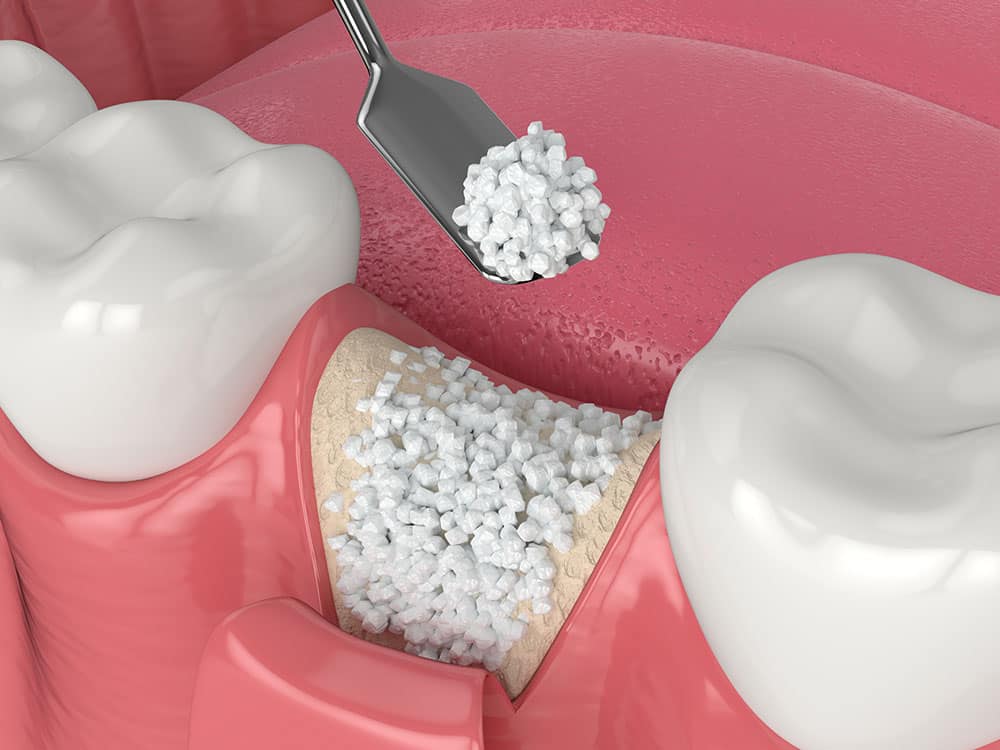
The most common graft we place, and by far the easiest. Immediately after a tooth is removed, the socket is filled with biocompatible graft material that your own bone grows into over the following months.
What it prevents:
- Collapse of the ridge as the socket heals
- Loss of facial support in that part of the jaw
- A larger, longer and more expensive graft later
- An implant site that has to be rebuilt before it can be used
It adds only a few minutes to the extraction appointment. If there is any chance you will want an implant in that space, it is the right call.
Bone is often already missing — from long-standing infection, from gum disease, or from an old extraction site that was never grafted. Ridge augmentation rebuilds the width and height of the jaw so an implant can be placed.
Think of it as rebuilding the foundation before you build the house.
Graft material is placed and left to integrate over several months, and the implant then goes into stable healthy bone. Without adequate bone an implant is a gamble; with proper augmentation it is a long-term restoration.
Soft tissue over a graft site closes within one to two weeks, and most patients are comfortable well before that.
The bone underneath is the slower part. A preserved socket generally needs three to six months before it will take an implant, and a larger augmentation can take longer. We image the site before proceeding rather than working to a calendar.
3D Imaging and Planning Before Anything Is Started
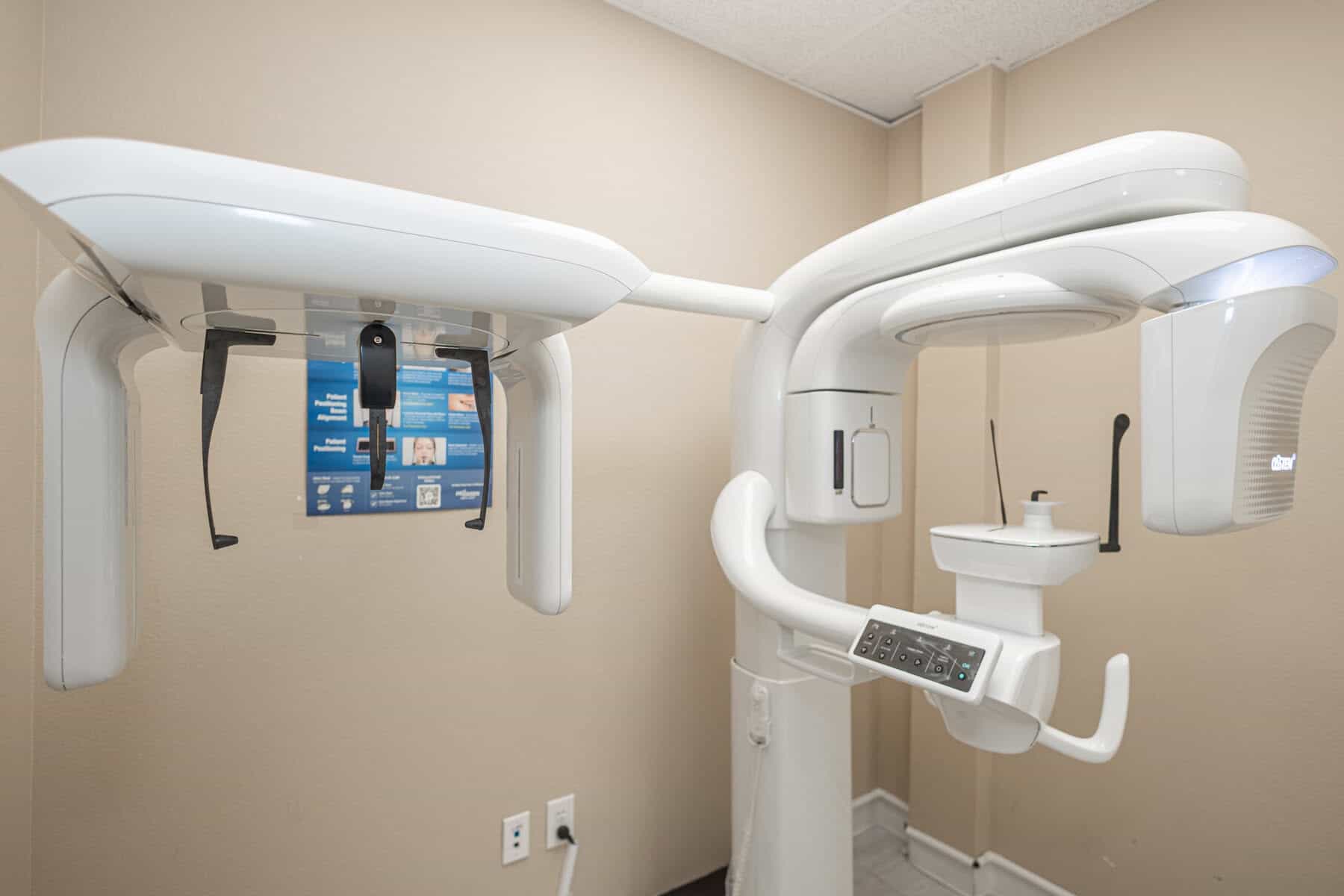
We take panoramic and 3D cone beam images in our own offices. That matters more for surgery than for almost anything else in dentistry, because a flat X-ray cannot show you width of bone, and width is usually what decides whether an implant is possible.
What we can see before we begin:
- Bone height and width at the exact site
- The position of the sinus and the nerve canal
- Root shape and any fragments below the gum
- Infection in the surrounding bone
- Whether a graft is needed, and how much
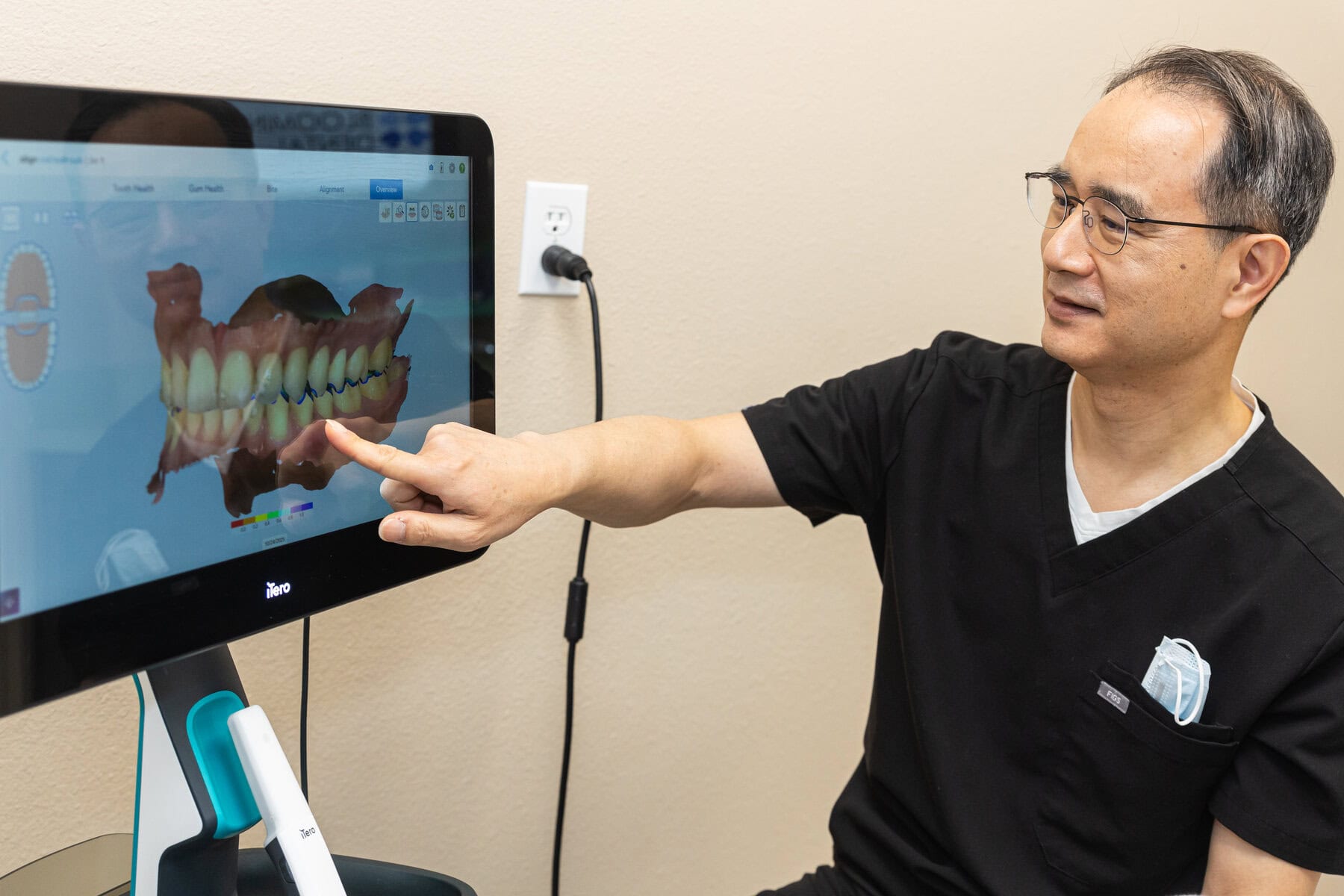
It also means you see what we see. Most patients find a surgical plan far easier to agree to when they are looking at their own scan rather than being told about it.
Sedation, Comfort and Recovery
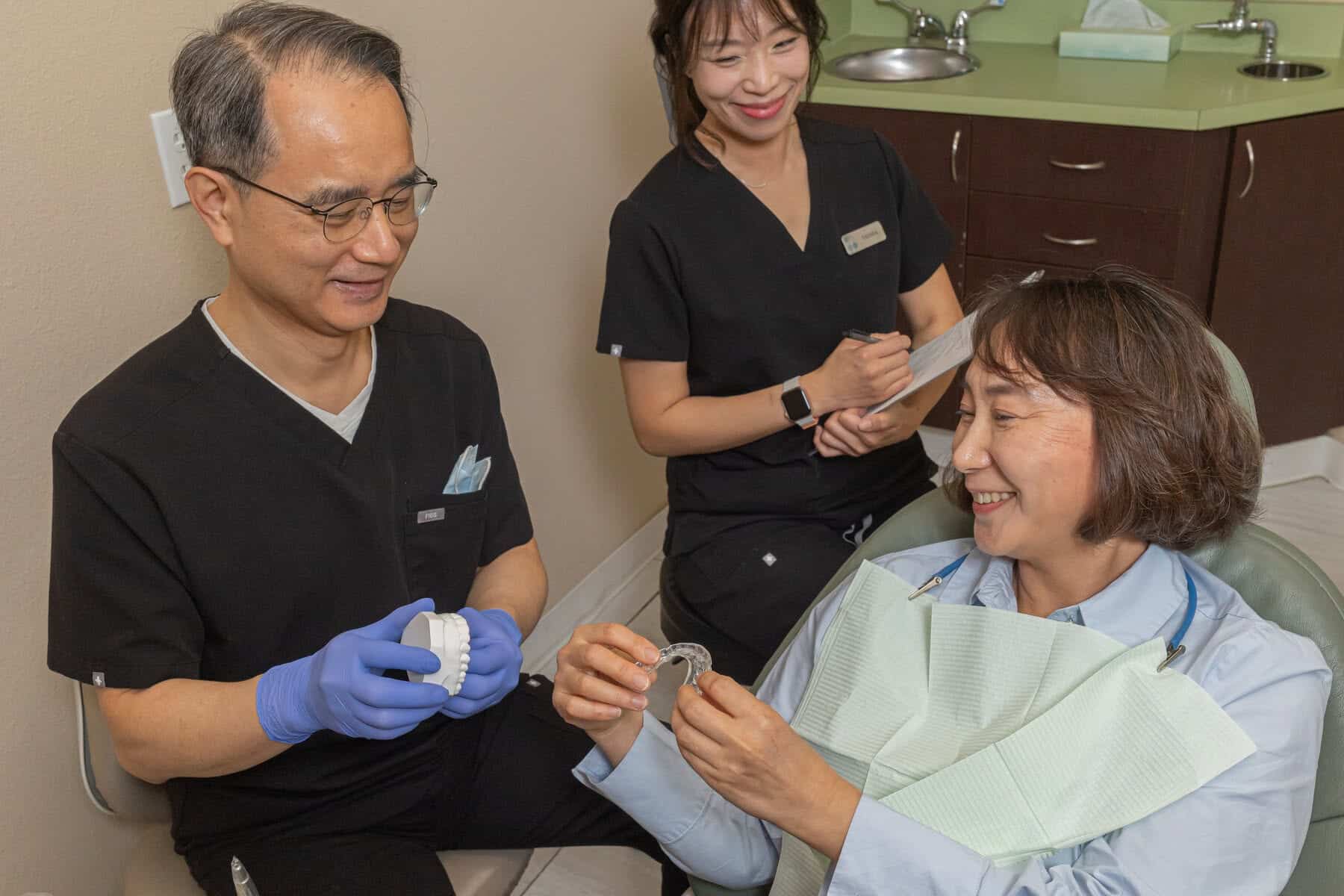
Anxiety about surgery is normal and we plan around it rather than talking you out of it. Tell us when you book, not when you sit down.
All of the procedures we perform are done under local anaesthetic, with nitrous oxide sedation available if you would like it. Nitrous takes the edge off within a couple of minutes and clears within minutes of the mask coming off, so most patients drive themselves home.
We do not offer general anaesthesia. If a case genuinely needs it, that is a reason to refer you rather than to improvise, and we will say so.
The clot in the socket is what everything else depends on, so the early instructions are all about protecting it.
For the first 24 to 48 hours:
- No straws, no suction of any kind
- No smoking or vaping — the largest single risk factor for dry socket
- Cold pack on the cheek, 20 minutes on and 20 off
- Soft, cool foods and no vigorous rinsing
- Start pain relief before the anaesthetic fully wears off
You leave with written instructions and a number to call. Detailed aftercare guidance is on our tooth extraction page.
Most recoveries are uneventful, but some things should not be waited out.
Call the office if you have:
- Pain that increases after day three rather than settling
- Bleeding that has not stopped with pressure
- Fever, or swelling that keeps growing after day two
- A bad taste or smell that does not clear
- Numbness that has not resolved
Dry socket in particular is quickly treated and there is no reason to endure it.

Wisdom Teeth: Why We Refer You Elsewhere
This is the most common question we are asked about oral surgery, so here is the plain answer: we do not remove wisdom teeth at Blooming Dental.
Wisdom tooth removal, particularly when the tooth is impacted or sitting close to the nerve, belongs with an oral and maxillofacial surgeon. That is their specialty, not ours. If you need one out we will refer you to a surgeon we trust, share your imaging, and stay involved in coordinating your care around it.
If you are not sure whether the tooth causing trouble is a wisdom tooth, come in and we will image it and tell you. And if it turns out to be a tooth we can treat, we will simply get on with it. Every other kind of surgical extraction is handled in our own offices — see tooth extractions.
What Oral Surgery Costs, and What Insurance Covers
Surgical fees depend on the procedure, whether grafting and PRF are involved, and how much imaging and planning the case needs. We examine and image before quoting, because a number given without seeing the site is not a real number.
Most dental plans cover surgical extractions and often contribute toward bone grafting where it is clinically necessary; implant coverage varies widely. We verify your benefits, give you a written estimate before treatment starts, and offer CareCredit, Cherry, LendingClub and HFD financing if you would rather spread the cost.

Whether you need a tooth removed surgically, bone rebuilt before an implant, or an implant placed and restored by the same specialist, the first step is an examination and a 3D scan so you can see what we see.
Call us to book in Des Moines or Lynnwood. To read more about specific procedures, see tooth extractions or dental implants.