

When Does a Tooth Actually Need to Come Out?
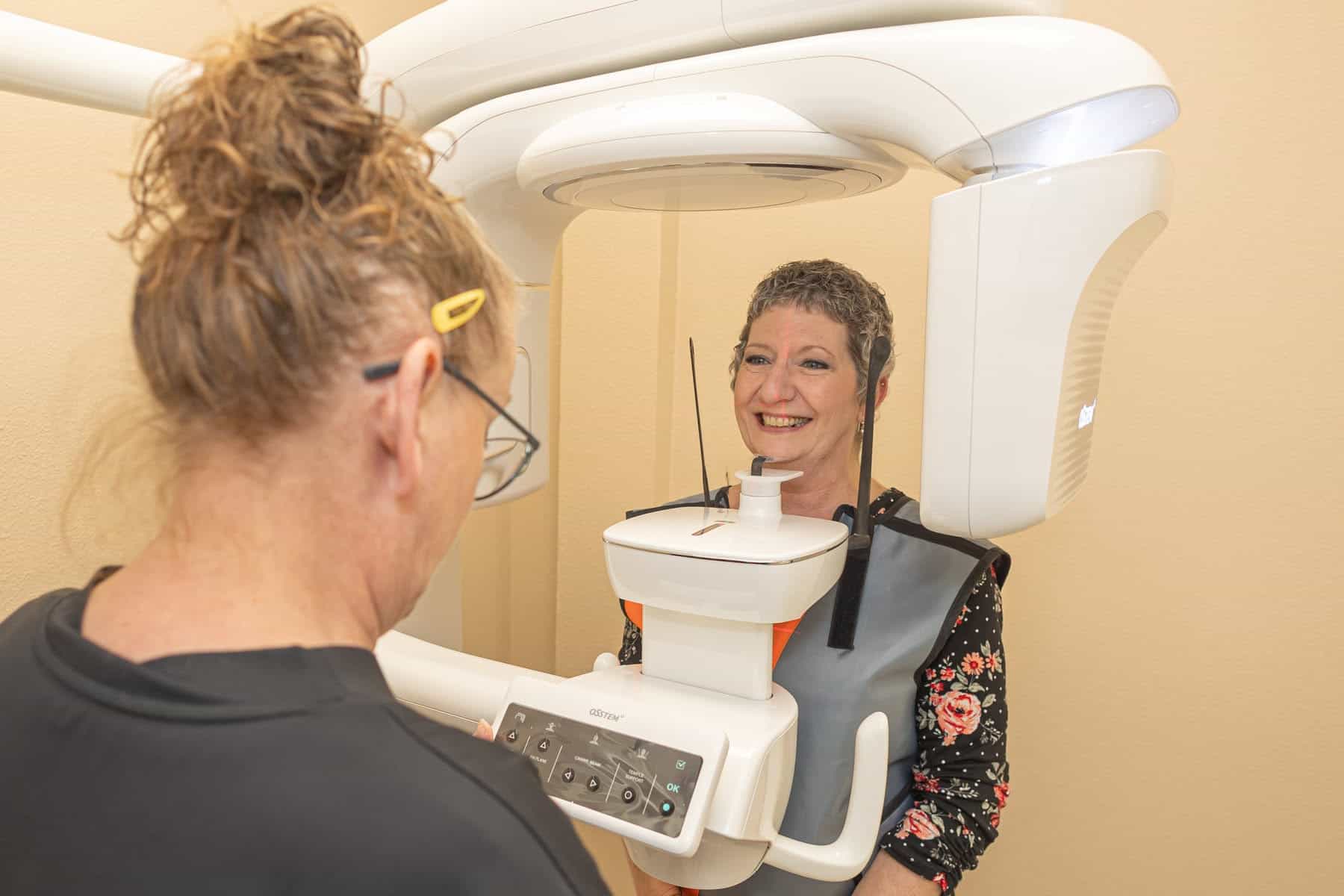
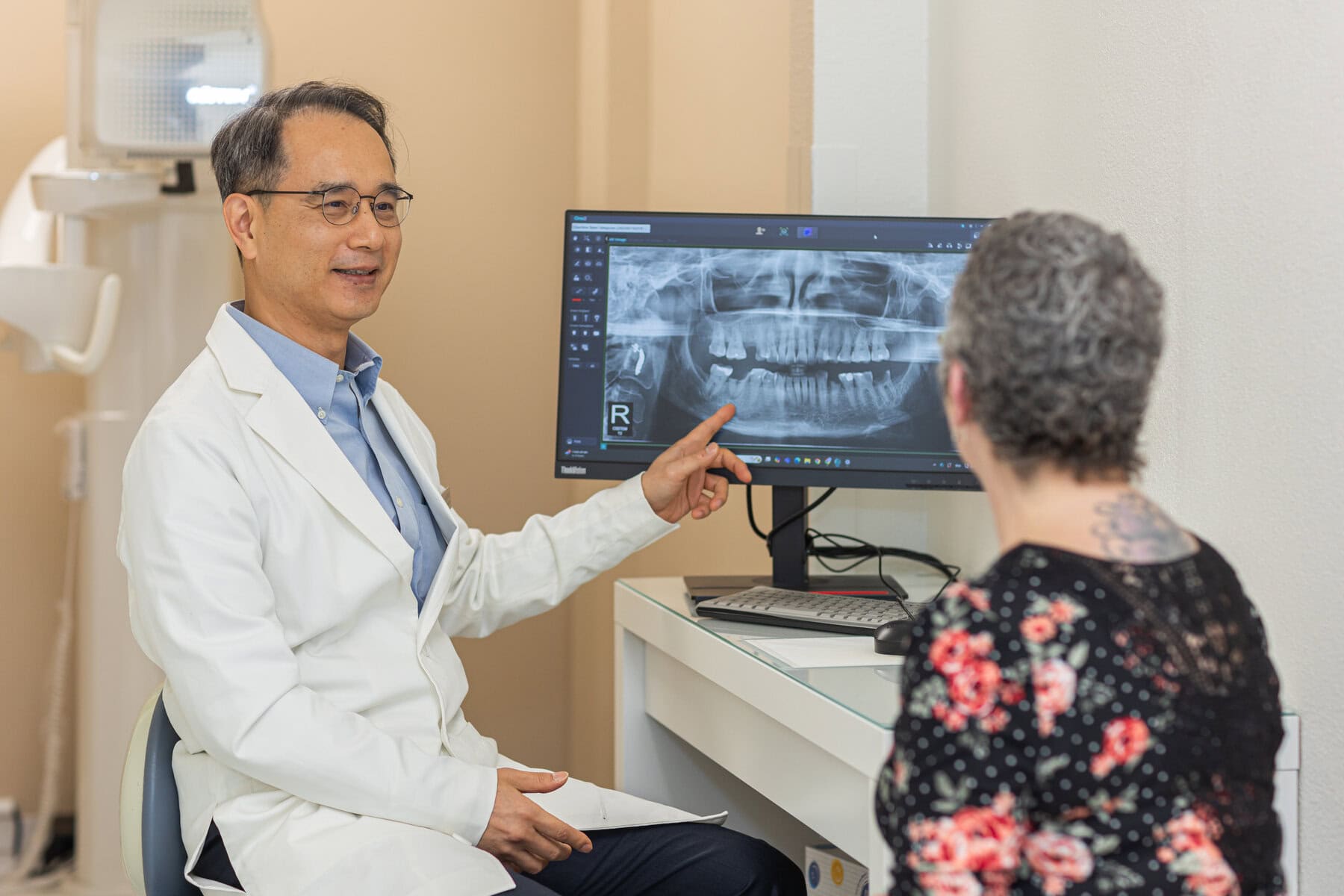
Extraction is the last option on the list, not the first. Before we recommend removing a tooth we look hard at whether a filling, a crown or root canal treatment could still save it.
A tooth generally has to come out when:
- Decay has destroyed too much structure to restore
- The tooth is fractured below the gum line
- Advanced gum disease has destroyed the bone holding it in
- Infection has not resolved after root canal treatment
- A failing tooth is putting the teeth or bone around it at risk
The American Dental Association notes that a tooth may need to be pulled when it is badly damaged or when infection or crowding leaves no better option.
We see patients for tooth extractions from Des Moines, Lynnwood, Federal Way, Burien, SeaTac and Edmonds. If you are in pain right now, call the office — we will get you seen and assessed rather than leaving you to wait it out.
Simple and Surgical Tooth Extractions
Not every extraction is the same procedure. Which one you need depends on how much of the tooth is above the gum and what the roots are doing underneath.
A simple extraction is used when the tooth is intact above the gum line and the roots are a straightforward shape. The area is numbed, the tooth is gently loosened, and it comes out in one piece.
It is usually over in under half an hour, and most patients are surprised how undramatic it is. Local anaesthetic is all that is needed, and you can drive yourself home.
A surgical extraction is needed when the tooth cannot simply be lifted out — because it is broken at or below the gum line, because the roots are curved or fragmented, or because infection has affected the bone around it.
Surgical removal is typically required when:
- The tooth is fractured at or below the gum
- Severe decay has left nothing solid to grip
- Roots are curved, fused or fragmented
- Infection has spread into the surrounding bone
In practice it means accessing the tooth differently — a small opening in the gum tissue, or sectioning the tooth so each part comes out cleanly. You are fully numb throughout, and the aim is always to take out the tooth while leaving the bone around it intact.
We do not perform wisdom teeth extractions at Blooming Dental. If a wisdom tooth needs to come out, we will refer you to an oral surgeon we trust and stay involved in coordinating your care.
We would rather tell you that plainly than take on a procedure that belongs with a specialist. Every other kind of extraction, including complex surgical removal of non-wisdom teeth, we handle in our own offices.
Socket Preservation and Bone Grafting
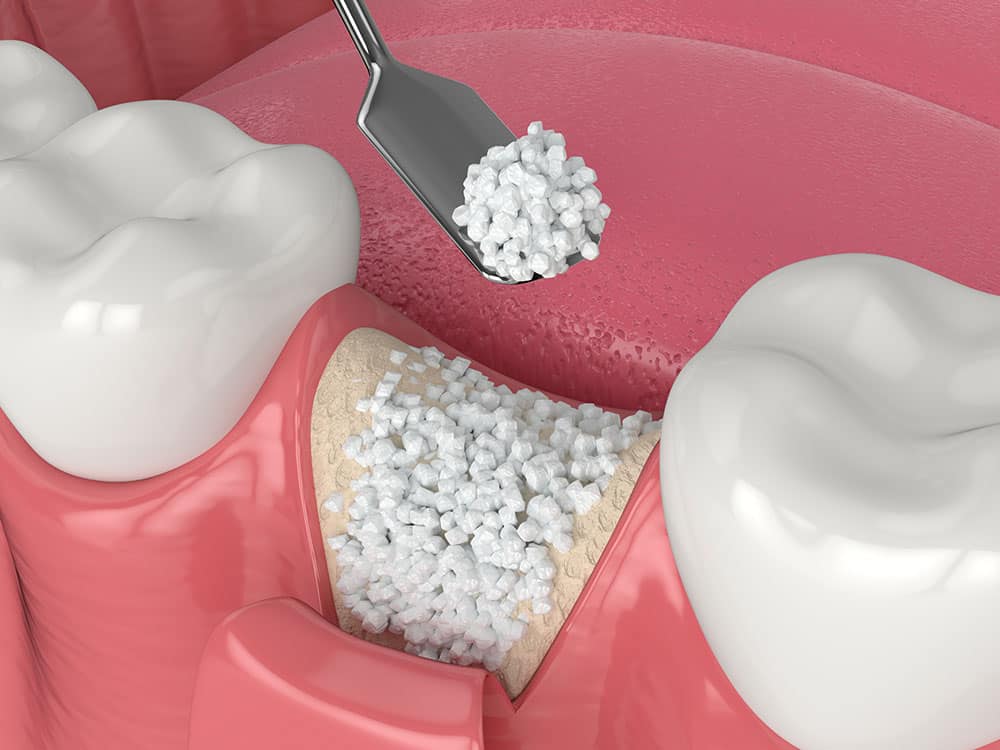
The moment a tooth comes out, the bone that held it starts to shrink. A graft placed at the time of the extraction is the difference between a straightforward implant later and a much bigger rebuilding job.
Socket preservation is the most common graft we place. Immediately after the tooth is removed, the empty socket is filled with biocompatible graft material that your own bone grows into over the following months.
Why it is worth the few extra minutes:
- Prevents the ridge collapsing inward as it heals
- Maintains the facial support around that part of the jaw
- Keeps a future implant straightforward
- Avoids a larger graft procedure later
If there is any realistic chance you will want an implant in that space, have the graft. Patients who are undecided usually choose it too, simply to keep the option open.
Sometimes the bone has already gone — from long-standing infection, gum disease, or an old extraction site that was never grafted. Ridge augmentation rebuilds the shape and volume of the jaw so it can support an implant.
Think of it as rebuilding the foundation before you build the house.
Graft material is placed, left to integrate over several months, and the implant is then placed into stable healthy bone. Without adequate bone, implants fail; with proper augmentation they last decades.
PRF Therapy for Faster, More Comfortable Healing
One of the biggest advantages we can offer an extraction patient is PRF — Platelet-Rich Fibrin, made from your own blood.
We draw a small sample, spin it in a centrifuge to concentrate the healing platelets and growth factors, and place that concentrate directly into the extraction site. It is your own biology, concentrated and applied exactly where the healing has to happen.
What PRF changes about recovery:
- Faster soft tissue healing
- Less swelling and less discomfort in the first days
- Better integration of bone graft material
- A lower risk of dry socket, because the clot is stabilised
- Nothing artificial and nothing from a donor
Patients who have had extractions both with and without PRF tend to describe the difference in recovery as obvious. For any extraction involving a bone graft, we consider it standard.

Tooth Extraction Aftercare and Healing Timeline
What you do in the first 48 hours decides most of how the next two weeks go. None of it is complicated, but the details matter.
A blood clot has to form in the socket and stay there. Everything in the first day is about protecting it.
Do:
- Bite gently on the gauze for the time we tell you
- Rest, and keep your head slightly elevated
- Use a cold pack on the outside of the cheek, 20 minutes on and 20 off
- Take pain relief before the anaesthetic fully wears off
Do not:
- Use a straw, or create any suction
- Smoke or vape — this is the single largest risk factor for dry socket
- Rinse vigorously or spit
- Drink alcohol or do anything strenuous
Cool and soft for the first day, then work back toward normal as comfort allows.
Good choices early on: yoghurt, smoothies eaten with a spoon, apple sauce, mashed potato, scrambled egg, cooled soup, well-cooked pasta.
Avoid for the first week: anything crunchy or hard, spicy food, very hot food and drink, alcohol, and small particles such as seeds, nuts, popcorn and rice that can lodge in the socket. Chew on the opposite side until the area feels settled.
Days 1 to 3: the clot forms and stabilises. Swelling usually peaks around day two and then improves.
Days 3 to 7: soft tissue starts closing over the socket. Most patients are back to normal activity and easing back onto a normal diet.
Weeks 1 to 2: the gum has largely closed. Any stitches used are usually dissolved or removed.
Months 3 to 6: bone fills the socket underneath. This is the timeline that governs when an implant can be placed.
Dry socket occurs when the clot is lost too early and the bone underneath is exposed. It typically appears two to four days after the extraction as a deep ache that gets worse rather than better, often with a bad taste.
It is treatable and relief is usually rapid, so call rather than waiting it out. The American Dental Association also lists smoking and suction as the leading risks.
Call us if you have:
- Pain that increases after day three
- Bleeding that has not settled
- Fever, or swelling that is getting worse rather than better
- A bad taste or smell that does not clear
Comfort, Sedation and What an Extraction Costs
We take dental anxiety seriously. Local anaesthetic, nitrous oxide sedation, unhurried technique and PRF therapy are all used to make an extraction as easy as it can reasonably be — tell us when you book if you are nervous, so we can plan the visit properly.
On cost: it depends on whether the extraction is simple or surgical, and whether a bone graft and PRF are placed at the same visit. Most dental plans cover a share of extractions. We check your benefits and give you a written estimate before treatment, and we offer CareCredit, Cherry, LendingClub and HFD financing.

If you have been told a tooth needs to come out, you deserve care that is gentle on the day and sets you up properly for what comes next. Dr. Yoon’s prosthodontic training, PRF-assisted healing and socket preservation mean the space is ready for a replacement when you are.
Call us to book your consultation in Des Moines or Lynnwood. To plan the replacement, see dental implants, dental bridges or dentures.