

What Is a Dental Crown and When Do You Need One?
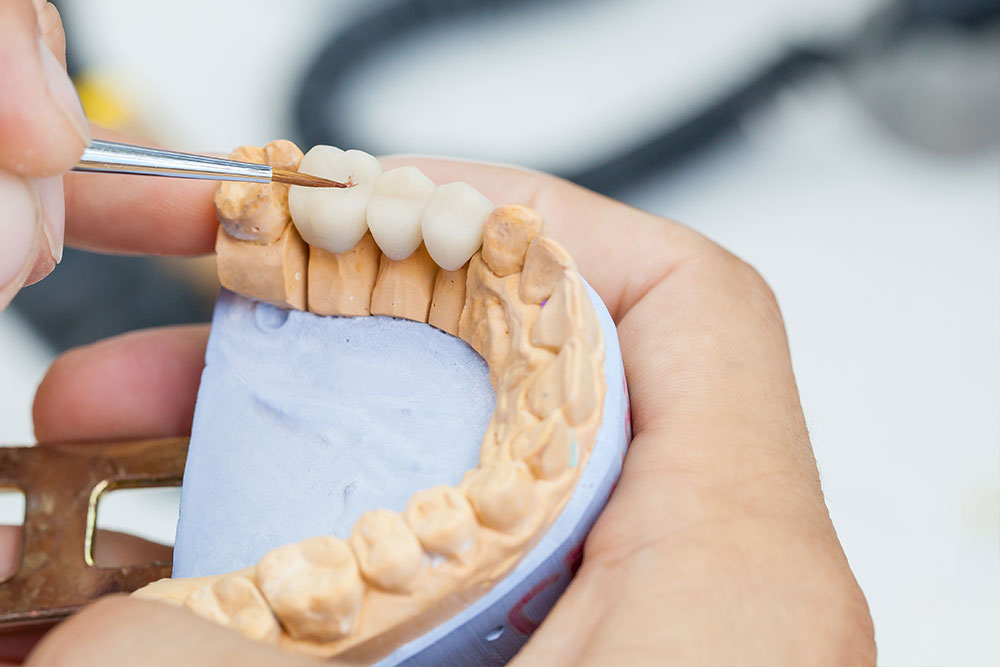
A dental crown is a custom cap that covers the entire visible part of a tooth. It restores the tooth’s original shape and strength while protecting whatever natural structure is left underneath.
Crowns are the standard answer when a tooth is too compromised for a filling — a large cavity, a crack or fracture, years of wear from grinding, or a tooth that has just had root canal treatment. The American Dental Association describes a crown as a way to restore a tooth’s shape, size and strength when a filling is no longer enough.
Patients come to us for dental crowns from Des Moines, Lynnwood, Federal Way, Burien, SeaTac and Edmonds. Whether it is one tooth or several, the aim is the same: keep your own tooth, and make the restoration on top of it disappear.

Why See a Prosthodontist for a Dental Crown?
Any general dentist can place a crown. A prosthodontist spends three additional years after dental school studying almost nothing else — tooth preparation, material science, bite mechanics and how restorations behave over decades.
Prosthodontics is one of the dental specialties recognised in the United States, and it exists because restoring teeth well is harder than it looks. Dr. Yoon completed his prosthodontic residency at Columbia University.
What that specialty training covers:
- Tooth preparation shaped for retention without over-cutting healthy enamel
- Choosing the material that fits the tooth, the bite force and the aesthetic demand
- Reading the bite so a new crown is not the tooth taking all the load
- Multi-unit and implant-supported restorations planned as one system
In practice that shows up as a crown that seats cleanly, needs fewer adjustments at the fit appointment, and does not become the next problem in your mouth.
A good share of the crown work we do is redoing crowns placed elsewhere. Crowns fail for identifiable reasons, and the reason matters more than the crown.
What we look for first:
- Decay starting at the margin where the crown meets the tooth
- A bite that loads one tooth far harder than the rest
- An untreated grinding habit with no night guard
- Gum recession exposing the crown edge
If we simply replace the crown and leave the cause in place, the replacement is on the same clock. Diagnosing that cause is what the specialty training is for.
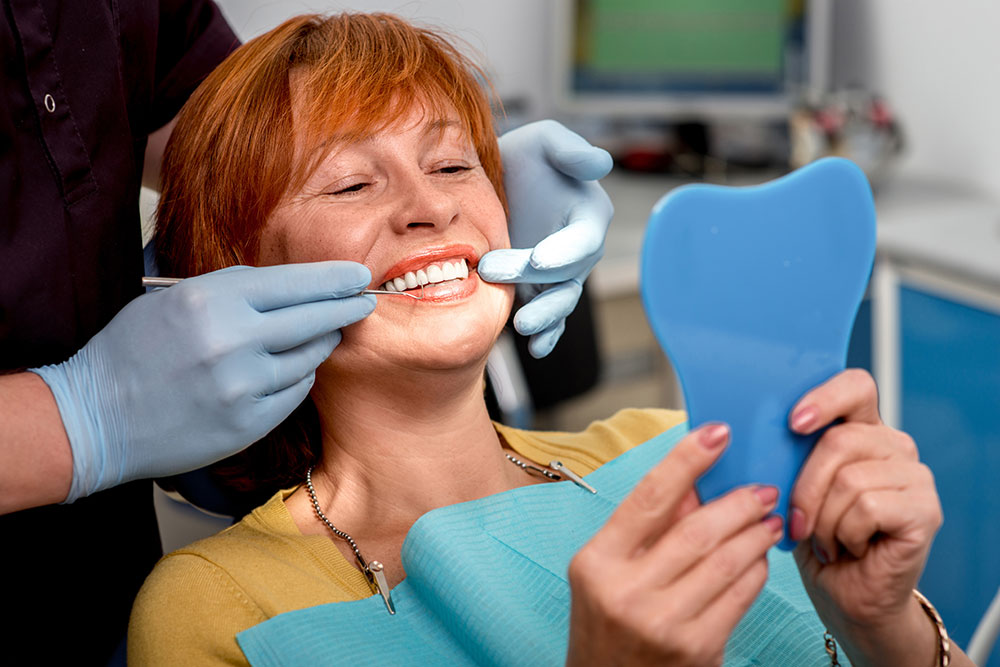
Dental Crown Materials: Porcelain, Ceramic and Zirconia
Material choice is a trade-off between how strong a crown needs to be and how invisible it needs to be. Where the tooth sits in your mouth usually settles it.
Porcelain and all-ceramic crowns transmit light in much the same way natural enamel does, which is why they are the default for front teeth and any tooth that shows when you smile.
They are strong enough for everyday function in the front of the mouth. Where they are less suitable is a heavy-grinding back tooth carrying full chewing load.
Zirconia is the toughest material in routine crown use. It resists chipping and fracture, and it can be made thinner than porcelain, so less healthy tooth has to be removed to make room for it.
Zirconia is usually the pick when:
- The crown is on a molar or premolar
- You grind or clench, diagnosed or suspected
- A previous ceramic crown has already fractured
- There is limited vertical space for the restoration
Modern layered zirconia looks far better than the opaque early generations, and for most back teeth the aesthetic difference is not visible.
A metal substructure with porcelain baked over it has decades of clinical track record. It remains genuinely useful in some bridge designs and where clearance is tight.
The limitation is aesthetic: the metal core blocks light, so the crown can look flatter than a neighbouring natural tooth, and a grey line can appear at the gum if the gum recedes. We will tell you plainly when it is the better engineering answer and when it is not.
Digital Impressions and Same-Day Crown Technology
The most common thing patients dread about a crown is the impression — a tray of putty held in your mouth while it sets. We do not use one.
Your tooth is scanned with an iTero intraoral scanner. The scan appears on screen in seconds, you can see the same picture Dr. Yoon is looking at, and the file goes straight to the mill or to the laboratory with no material to distort in transit.
What the digital workflow changes for you:
- No putty, no gagging, no setting time
- A more accurate fit at the margin, where crowns are won or lost
- Fewer adjustments at the appointment where the crown is fitted
- Same-day crowns become possible, because there is nothing to post
- Your scan is stored, so a remake years later does not start from scratch
Digital impressions for crowns are not a gimmick. They remove the step in the old process that introduced most of the error.
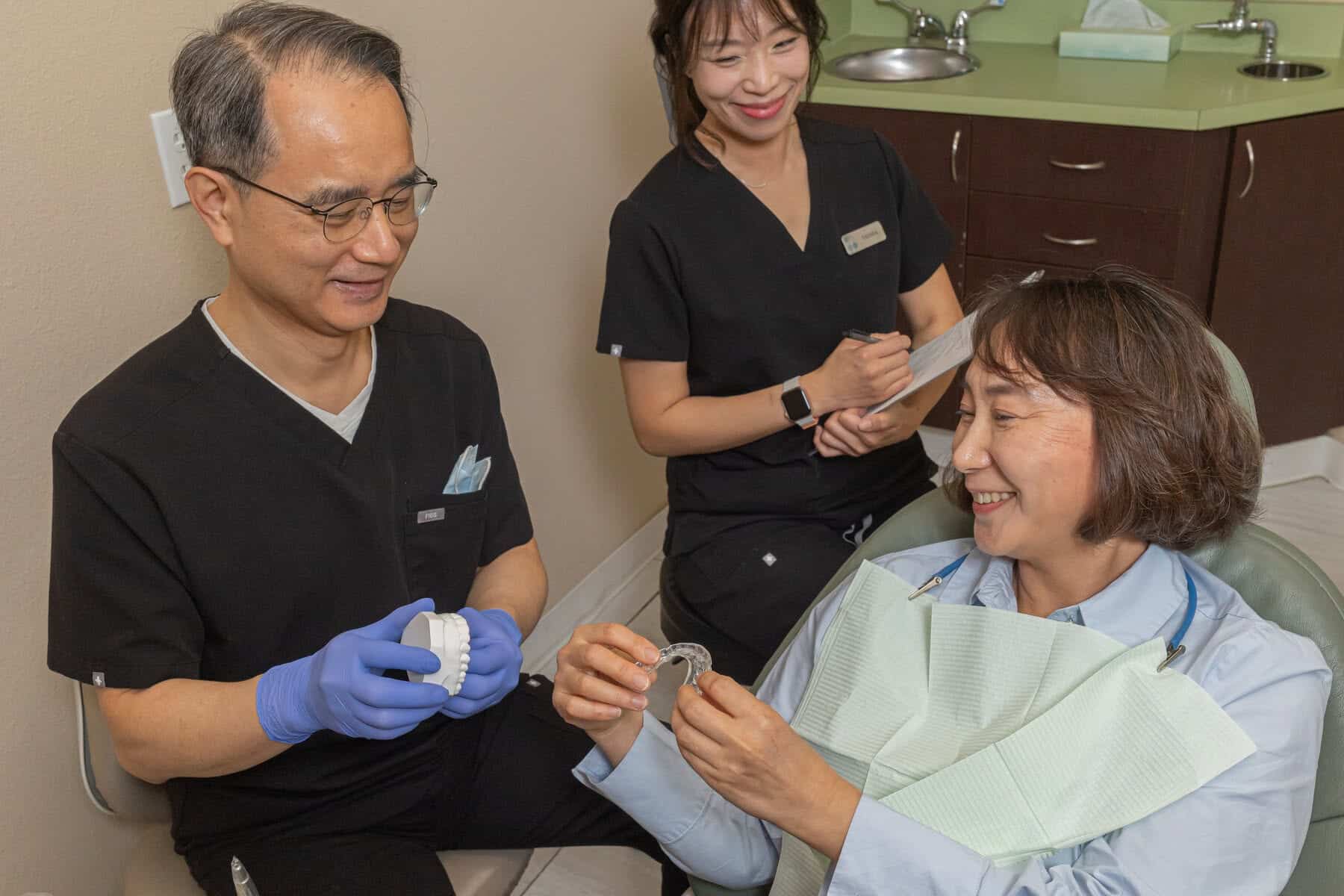
The Dental Crown Procedure, Step by Step
Most patients have not had a crown before and want to know exactly what is going to happen. Here is the whole sequence.
We photograph and X-ray the tooth and check the health of the nerve and the bone around it. If the nerve is already involved, root canal treatment has to come first — there is no point crowning a tooth that will need to be opened again.
We also look at your bite as a whole, because a cracked tooth is often a symptom of where the force is landing.
The shade is chosen before the tooth is prepared, while your natural tooth is still there to match against. Then the tooth is numbed and shaped, and the prepared tooth is scanned.
Preparation removes only what has to come off for the crown to have a stable seat and enough thickness in the material.
For a same-day crown, the restoration is designed on screen and milled while you wait, then characterised and glazed.
For a lab crown, your scan is sent to the ceramist, you leave with a temporary crown, and the finished restoration comes back in roughly one to two weeks.
The crown is tried in before it is cemented. We check that it seats fully, that the contacts with the neighbouring teeth are right, that floss passes properly, and that the shade works in natural light.
Then the bite is adjusted, because a crown that is even slightly high is the usual cause of soreness afterwards. Only then is it cemented.
Mild sensitivity for a few days is normal. Anything that persists, or a bite that feels off, we want to see — an adjustment takes minutes.
If you grind your teeth we will discuss a night guard. It is the cheapest insurance there is on restorative work, and it protects your natural teeth at the same time.
What Affects the Cost of a Dental Crown?
Crown fees are not one number, and any practice quoting one before looking at the tooth is guessing. What actually moves the price is the material, whether the crown is milled in-house or layered by hand in a laboratory, whether the tooth first needs a build-up or root canal treatment, and what your insurance plan covers.
Most dental plans treat crowns as major restorative work and pay a share after the deductible, up to your annual maximum. We check your benefits and give you a written estimate before you commit, and we offer CareCredit, Cherry, LendingClub and HFD financing if you would rather spread the cost.

If a tooth is cracked, worn, heavily filled or has just had root canal treatment, a crown is usually what keeps it. Dr. Yoon’s prosthodontic training, iTero digital scanning and same-day milling mean a precise fit and a natural result.
Call us to book your consultation in Des Moines or Lynnwood. If you are replacing a missing tooth rather than restoring one, start with dental bridges or dental implants instead.